Tree of the month:
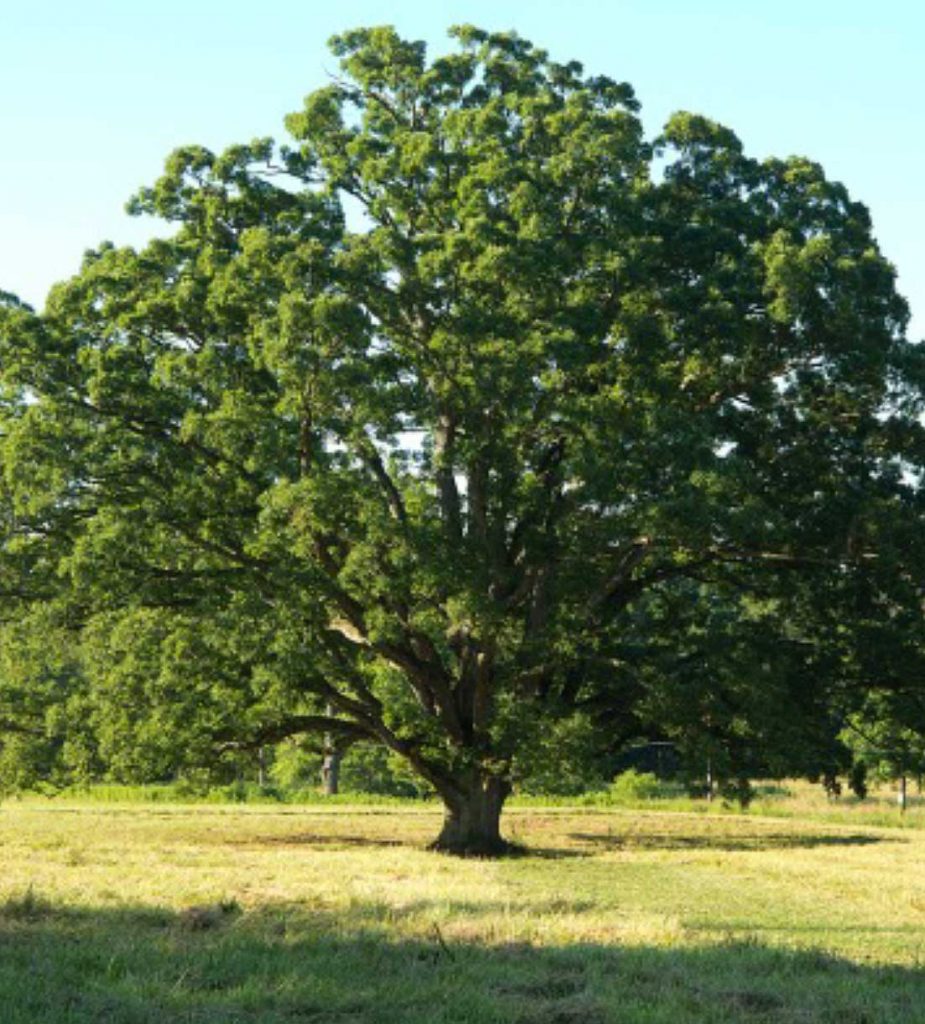
The White Oak (Quercus alba) is a large, long-lived deciduous tree native to eastern and central North America, widely valued for its strength, ecological importance, and aesthetic appeal. It is the state tree of Connecticut, Illinois, and Maryland. White Oak thrives in diverse habitats, from dry ridges to low valleys, and grows best in full sun to partial shade. As a foundation species, it supports hundreds of butterfly and moth species, making it a vital contributor to biodiversity. Its wood is among North America’s most important hardwoods, prized for its durability, strength, and natural water resistance.
Key Features of the White Oak:
Leaves:
The leaves are a key identification feature, typically 5 to 9 inches long with 7 to 9 distinctive, rounded lobes and no bristles at the tips. In the fall, they turn beautiful shades of deep red, bronze, or purple.
Bark:
The name “White Oak” comes from its light, ash-gray, or almost white bark, which has shallow grooves and flat, loose, or scaly ridges.
Growth Rate:
The growth rate of the White Oak is slow to medium, averaging about 1 foot per year, though it can grow 12 to 15 feet in 10 years, particularly when young. This rate slows down after the first 20 to 30 years. Growth is also influenced by environmental factors such as soil type, sunlight, and water availability.
Life Span:
The White Oak’s bark is light gray and divided by shallow fissures into small, vertically aligned blocks. While the White Oak grows extremely slowly, individuals can live for five hundred to six hundred years (especially in deep, moist but well drained soils).
Shrub of the Month:
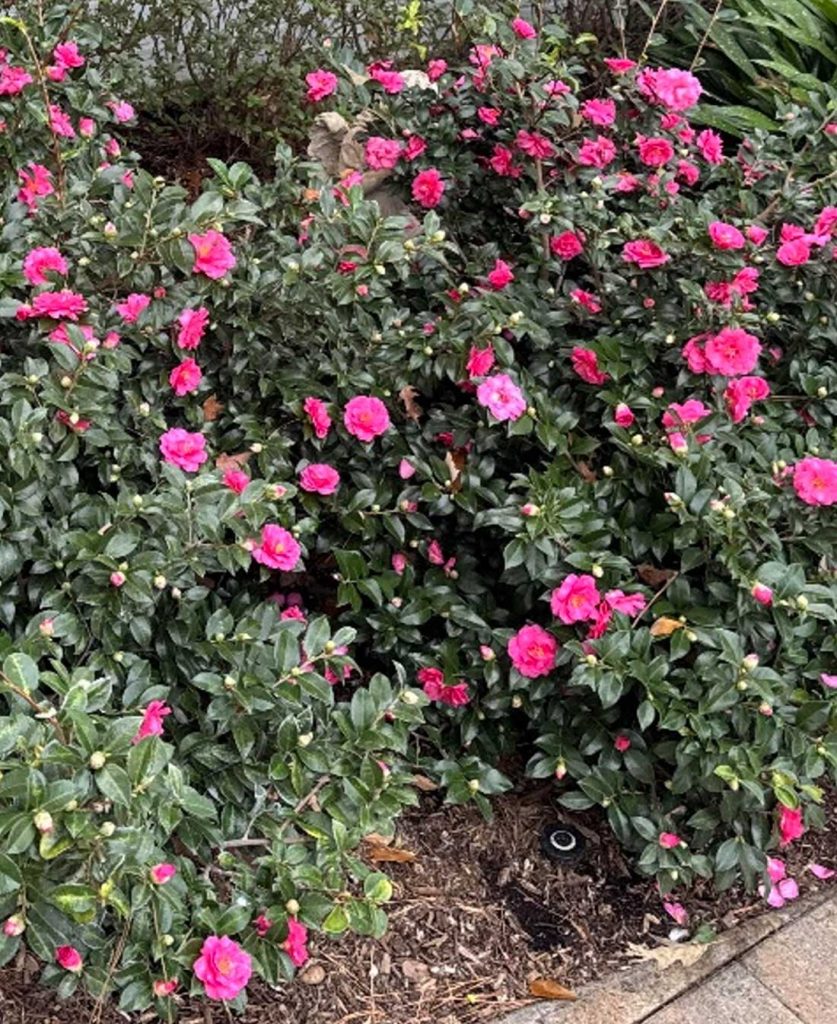
The Shi Shi Camellia (Camellia sasanqua ‘Shishi Gashira’) is an evergreen shrub prized for its glossy foliage and vibrant pink blooms that appear from fall through early winter. Low-maintenance and adaptable, it thrives in moist, well-drained, acidic soil and tolerates full sun to partial shade. This compact shrub typically grows 4–5 feet tall and spreads 6–8 feet wide, making it well-suited for hedges, containers, and mass plantings. It works beautifully as a standalone specimen or in grouped arrangements to create a striking effect in woodland gardens.
Key Features of the Shi Shi Camellia:
Flowers:
Produces prolific, 2 to 3-inch, semi-double, bright rose-pink flowers with golden-yellow centers, providing vibrant color when most other plants are dormant.
Blooms:
The primary bloom season is from early fall through early winter (October to December).
Foliage:
Features glossy, dark green leaves year-round.
Growth Habit:
It has a unique weeping or low-growing, spreading habit, making it ideal for various landscape uses. Reaches a mature height of 4–5 feet and a width of 6–8 feet.
Care:
Plant any time of year, avoiding temperature extremes. December and January are often ideal planting months in suitable climates. Prefers morning sun with afternoon shade or all-day filtered sun, but is tolerant of full sun in some climates. Water deeply when newly planted. Once established, it can be drought-tolerant but prefers consistent moisture.
Perennial of the Month:
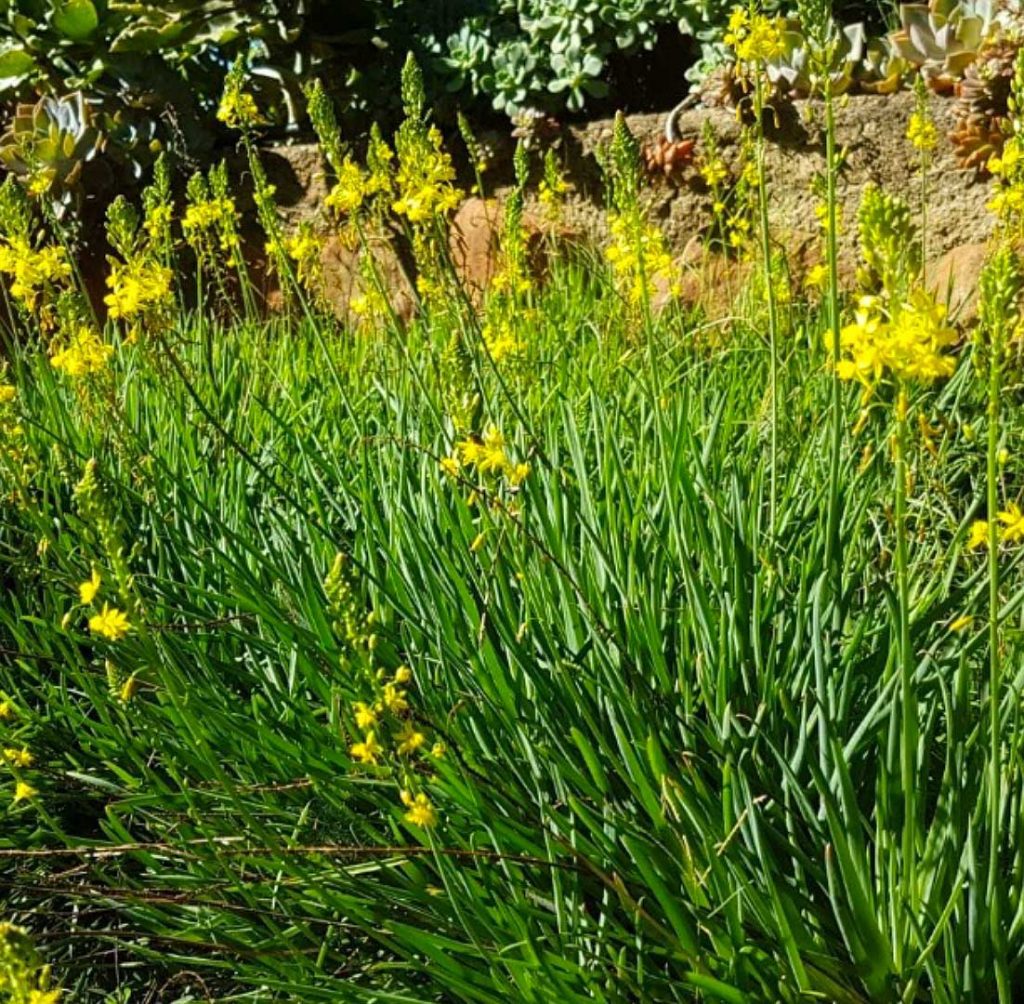
Yellow Bulbine (Bulbine Frutescens ‘Yellow’) is a South African succulent perennial that features yellow, star-shaped flowers and fleshy, green leaves. Renowned for its low-maintenance and drought-tolerant nature, it’s an ideal choice for xeriscaping, rock gardens, and containers. Moreover, its leaf jelly possesses medicinal properties, offering relief from burns, rashes, and insect bites. The plant thrives in full sun and well-draining soil. Often referred to as the “burn jelly plant,” the fresh leaves of Bulbine Frutescens contain a jelly-like sap, akin to Aloe vera, which can be applied topically to soothe minor skin ailments such as burns, rashes, insect bites, blisters, and cracked lips. Once established, the plant is deer-resistant and highly drought-tolerant.
Key Features of the Yellow Bulbine:
Flowers:
Showy spikes of small, star-shaped yellow flowers with frilly stamens rise above the foliage. They attract bees, butterflies, and hummingbirds.
Foliage:
Fleshy, narrow, gray-green, grass-like leaves.
Growth Habit:
Forms spreading clumps via rhizomes and can be easily divided. Mature clumps grow to about 1-1.5 feet tall and spread up to 2-4 feet wide; flower stalks can reach up to 2 feet in height.
Care:
This plant prefers full sun for optimal flowering but can tolerate light shade. It adapts to various soil types but thrives in well-drained soil, as it’s prone to root rot in standing water. It’s a low-maintenance plant that requires occasional upkeep, such as deadheading spent flower stalks to promote more blooms.