Tree of the month:
The Retama Tree (Parkinsonia aculeata)
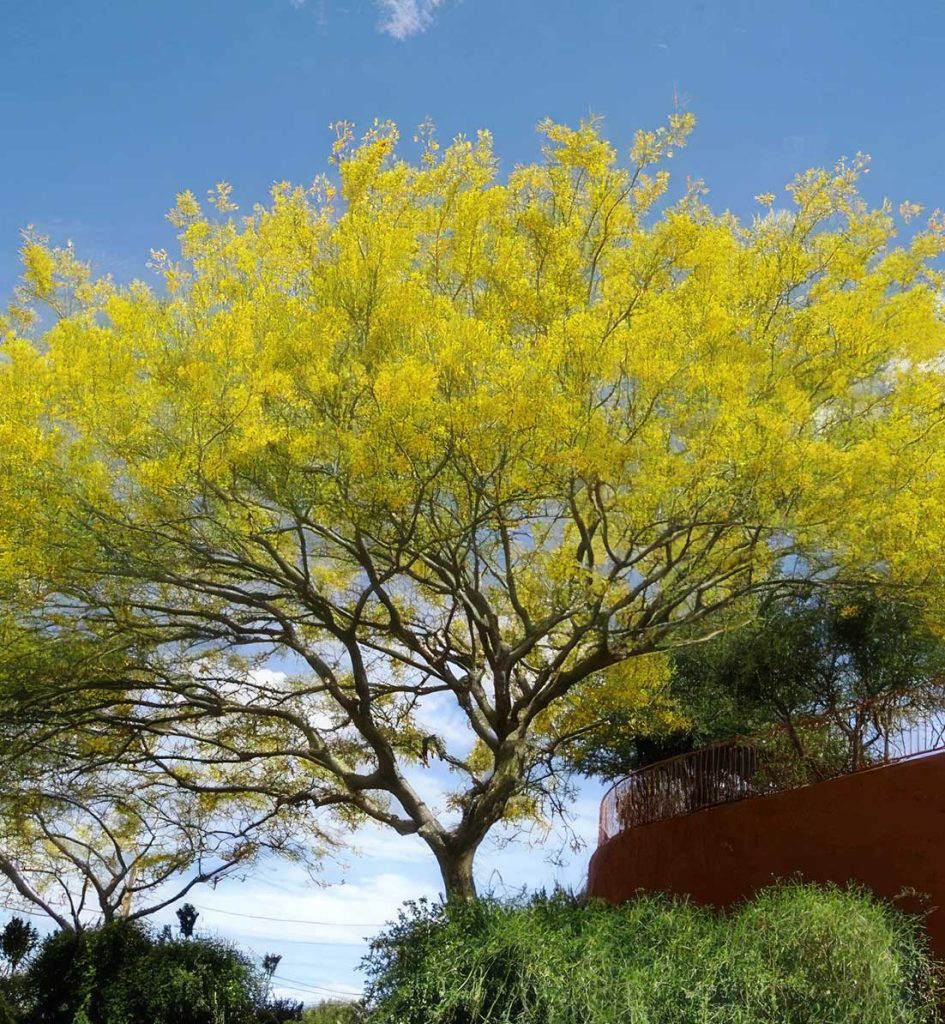
Also known as Jerusalem Thorn, Mexican Palo Verde, or Paloverde, is a fast-growing, highly resilient desert tree native to the Southwestern United States, particularly Texas, as well as Mexico and parts of South America. Its green stems and branches are armed with sharp, short spines that curve slightly upward. Because of its thorns and falling seed pods, the Retama is best planted as an accent tree or in naturalized borders away from walkways, patios, and other high-traffic areas. Its bright yellow flowers are highly attractive to bees, butterflies, and other pollinators, while the resulting brown seed pods provide an important food source for birds and small mammals.
Key Features:
Appearance:
Features an open, airy, weeping canopy with a distinctive bright green trunk and branches that can process energy even when the tree drops its leaves.
Blooms:
Explodes with brilliant yellow five-petaled flowers (often accented with orange or red centers) from April through August.
Flowers:
Produces fragrant, bright yellow flowers with red markings, primarily blooming in spring and continuing through the warm summer months.
Size:
Grows rapidly into a small-to-medium tree, typically reaching 15 to 30 feet in height and spanning 20 to 25 feet wide.
Care:
Requires full sun to achieve optimal blooming and health. Extremely low water requirement once established. It survives beautifully on as little as 12 inches of annual rain. Highly adaptable to poor soils, including rocky caliche, sandy, and low-organic soils. However, it must have excellent drainage; waterlogged roots will severely shorten its lifespan.
Shrub of the Month:
The Pineapple Guava (Acca sellowiana)
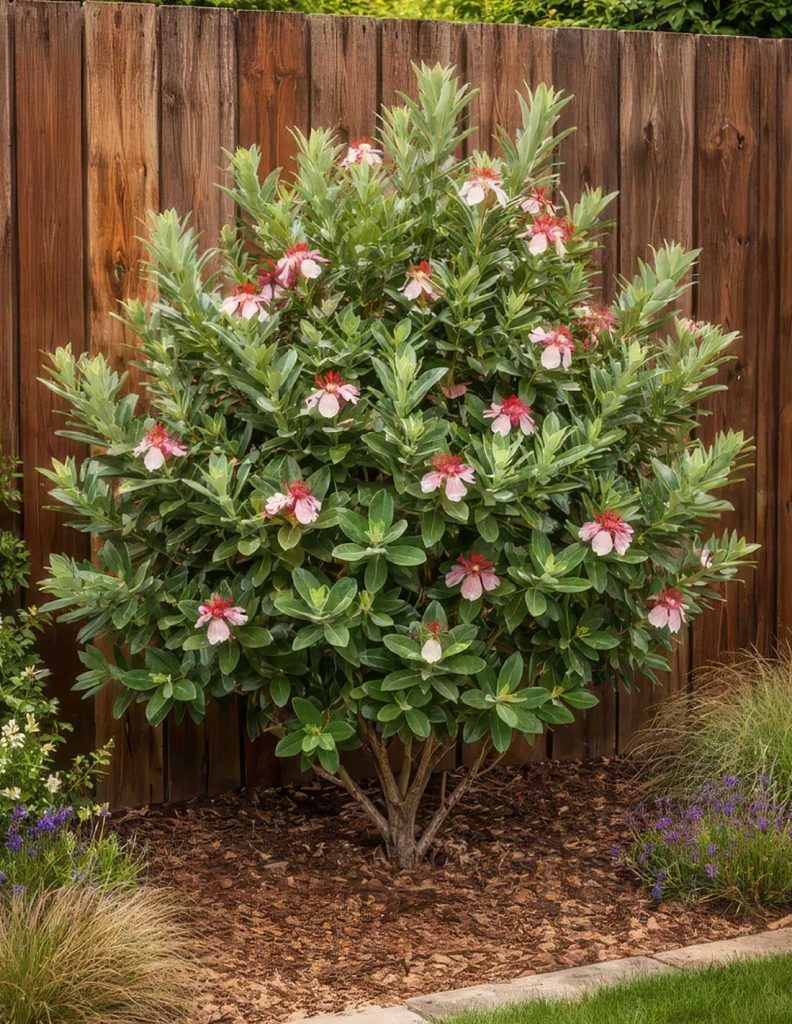
Also known as feijoa, is a versatile, broad-growing evergreen shrub that reaches 8 to 15 feet in height and width. Its soft gray-green leaves reveal silvery undersides, adding year-round visual interest, while edible white-and-red flowers appear in spring and sweet, tropical-flavored fruits ripen in fall. With its dense, naturally full growth habit, it makes an excellent privacy screen, windbreak, or accent hedge. The shrub is also notably deer-resistant and generally free of serious pests. Its blossoms are especially striking, with thick, fleshy white petals surrounding a vivid burst of crimson stamens. The petals are entirely edible, and harvesting them does not interfere with fruit development. Their sweet, subtly spicy flavor brings an elegant touch to salads, desserts, and other fresh dishes.
Key Features:
Appearance:
It naturally grows as a multi-stemmed shrub reaching 10 to 15 feet tall. It features thick, leathery gray-green leaves with stunning, bright silvery-white undersides.
Edible Flowers:
In late spring, it produces exotic white flowers with bright crimson stamens. The fleshy petals are completely edible, tasting surprisingly like sweet marshmallows or cotton candy.
Tropical Fruit:
In late fall, oval green fruits mature and drop to the ground. The inside contains a gelatinous pulp with a complex flavor reminiscent of a mix of pineapple, kiwi, and strawberry.
Size & Shape:
Naturally matures into a multi-stemmed bush reaching 10 to 15 feet tall and wide. It can easily be pruned into a formal hedge or trained into a small, single-trunk accent tree.
Care:
Prefers full sun for maximum fruit production, but tolerates partial afternoon shade in intensely hot desert climates. Thrives in rich, organic, well-draining soils with a pH of 5.5 to 7.0. While highly drought-tolerant once established, consistent weekly watering during fruit development ensures plump, juicy yields.
Perennial of the Month:
The Salvia Leucantha (Mexican Bush Sage)
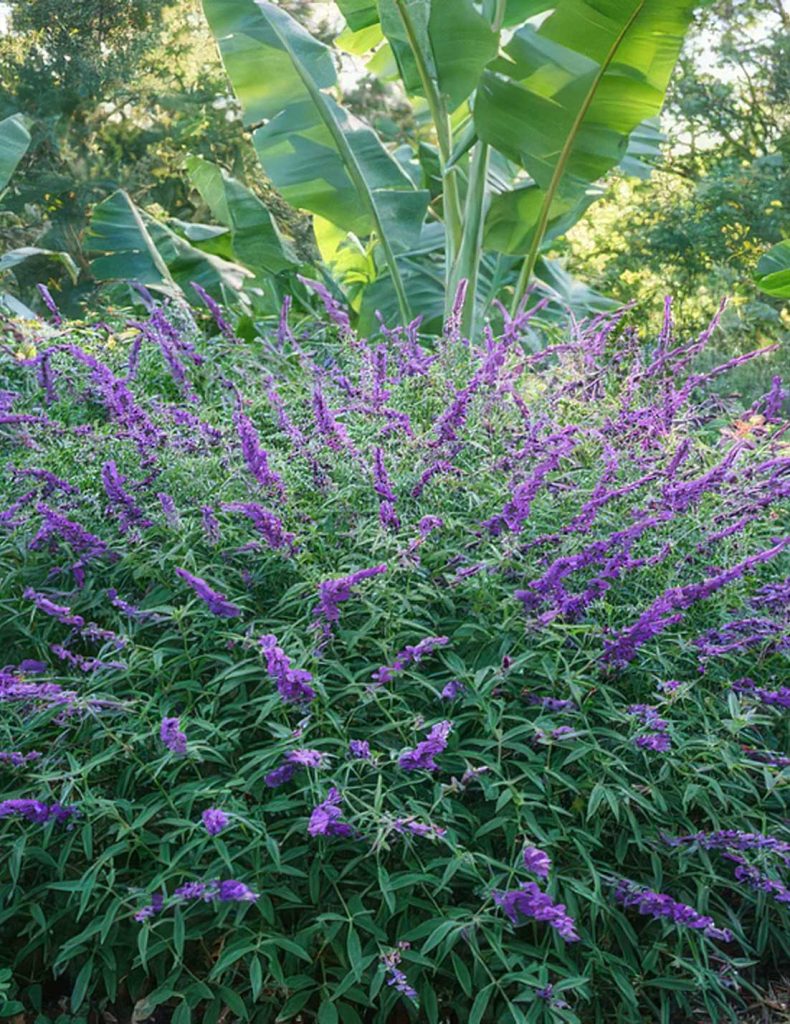
Also known as Velvet Sage, is a striking, drought-tolerant perennial prized for its velvety purple flower spikes and graceful, bushy form. Native to Mexico and Central America, it thrives in full sun and well-drained soil. Plant it in a sheltered location to protect its brittle branches from strong winds. Blooming from late summer until the first frost, Mexican Bush Sage adds vibrant color and valuable late-season nectar for hummingbirds and butterflies. It makes a beautiful choice for cottage gardens, xeriscapes, mixed perennial borders, and pollinator plantings.
Key Features:
Appearance:
It naturally grows as a multi-stemmed shrub reaching 10 to 15 feet tall. It features thick, leathery gray-green leaves with stunning, bright silvery-white undersides.
Edible Flowers:
In late spring, it produces exotic white flowers with bright crimson stamens. The fleshy petals are completely edible, tasting surprisingly like sweet marshmallows or cotton candy.
Tropical Fruit:
In late fall, oval green fruits mature and drop to the ground. The inside contains a gelatinous pulp with a complex flavor reminiscent of a mix of pineapple, kiwi, and strawberry.
Size & Shape:
Naturally matures into a multi-stemmed bush reaching 10 to 15 feet tall and wide. It can easily be pruned into a formal hedge or trained into a small, single-trunk accent tree.
Care:
Prefers full sun for maximum fruit production, but tolerates partial afternoon shade in intensely hot desert climates. Thrives in rich, organic, well-draining soils with a pH of 5.5 to 7.0. While highly drought-tolerant once established, consistent weekly watering during fruit development ensures plump, juicy yields.