Tree of the month:
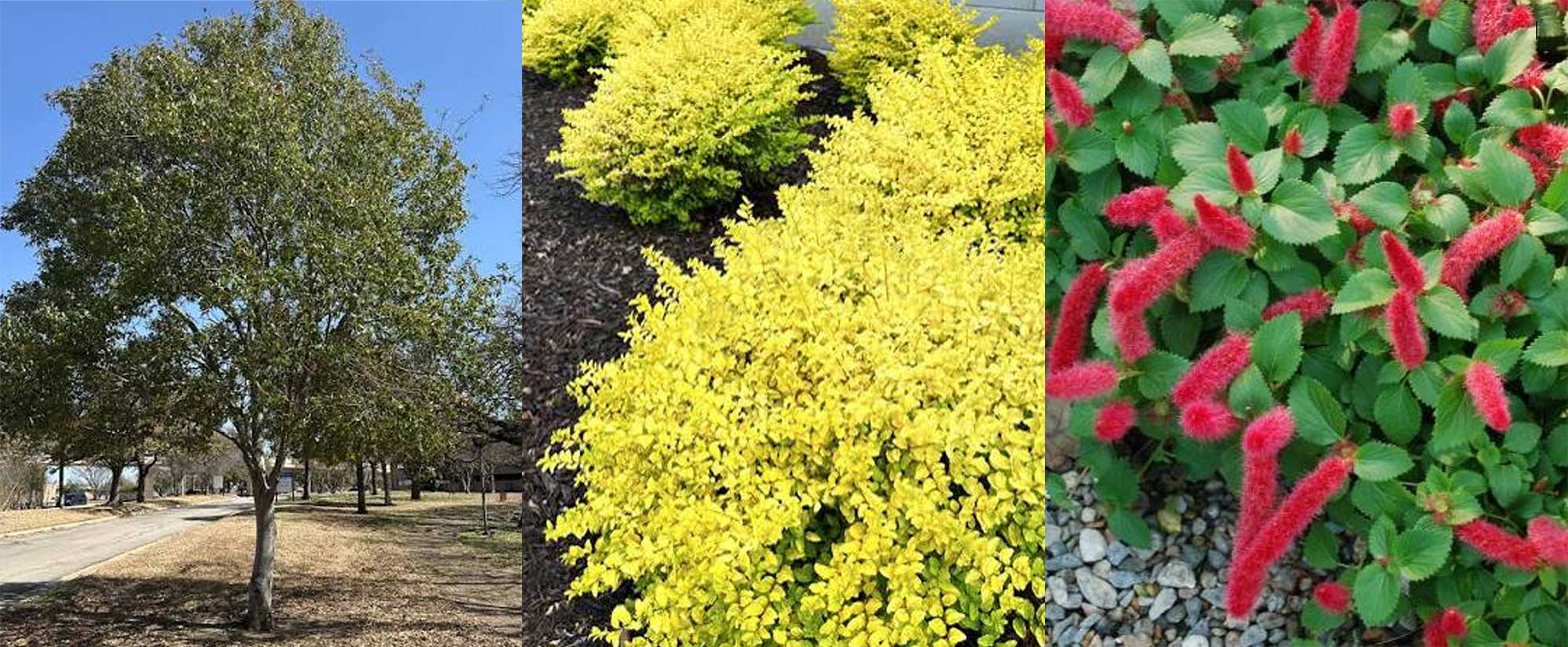
Chisos Oak (Quercus Graciliformis)
Commonly known as the graceful oak or slender oak, is a rare semi-evergreen tree native to the high elevations of the Chisos Mountains in far West Texas. Its natural distribution is extremely limited, occurring primarily in canyons such as Blue Creek Canyon and around Ward Spring. The species is distinguished by its exceptionally slender branches and narrow, often weeping foliage, giving it a graceful appearance that makes it an attractive alternative to evergreen oaks in suitable landscapes. Adapted to a harsh mountain-desert environment, Chisos oak is highly heat- and drought-tolerant once established. In the wild, it grows on dry, rocky canyon floors and other sheltered canyon habitats, typically at elevations above 5,000 feet (1,525 m). It prefers gritty, well-drained soils derived from volcanic rock and is most often found in mesic canyon environments where moisture is available but drainage remains excellent. Because of its highly restricted range, Chisos oak is considered a rare and threatened species. Its populations face ongoing pressures from habitat degradation, prolonged drought, and hybridization with related oak species.
Key Features:
Foliage:
The leaves are alternate, lanceolate (lance-shaped) to narrowly elliptic, measuring 1.7 to 3.5 inches long. They feature 8 to 10 shallow, bristle-tipped lobes with smooth, rounded sinuses. The upper surface is glossy green, while the underside is glabrous or mostly smooth.
Flowers:
Monoecious (separate male and female flowers on the same tree). Inconspicuous flowers emerge in spring (March to May), with male flowers forming drooping catkins.
Size:
Typically grows as a small tree or large shrub reaching about 20 to 30 feet (6 to 8 meters) in height, though historic wild specimens have exceptionally reached over 50 feet.
Care:
Thrives in full sun to partial shade and requires only occasional watering once established. It is relatively drought-tolerant and is considered a good choice in areas where resistance to verticillium wilt is desired.

Shrub of the Month:
Sunshine Ligustrum (Ligustrum Sinense ‘Sunshine’)
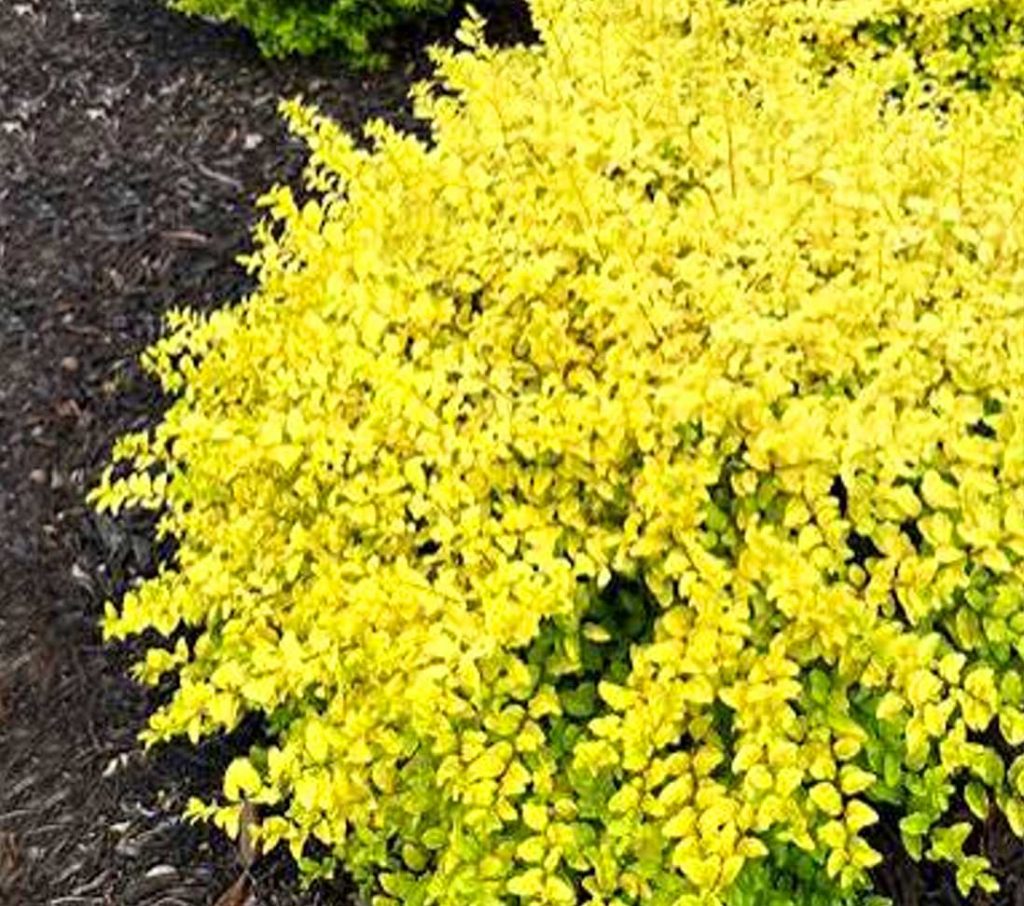
Is a popular sterile cultivar of Chinese privet prized for its vibrant golden-yellow foliage that provides year-round color. Developed as part of the Southern Living Plant Collection, this evergreen shrub offers a non-invasive alternative to traditional privets, producing no flowers, fruit, or unwanted seedlings. Once established, it is highly tolerant of heat and drought and is resistant to deer, urban pollution, and many common diseases. Plant 3–4 feet apart to create a dense, low privacy screen or property border. Its bright foliage also makes it an excellent standalone specimen or a striking contrast when paired with dark green evergreens or plants with purple foliage.
Key Features:
Foliage:
Striking golden-yellow in full sun; turns more lime-green or chartreuse in partial shade.
Size:
Grows to a compact 3–6 feet tall and 3–4 feet wide.
Care:
For the most intense golden foliage color, plant in full sun, where it will receive at least 6 hours of direct sunlight each day. Water newly installed shrubs 2–3 times per week during their first growing season to encourage strong root development. It adapts well to a wide range of soil types, including clay and sandy soils, as long as drainage is adequate to prevent root rot. Apply a balanced slow-release or organic fertilizer in early spring to support healthy new growth. This shrub responds very well to pruning and can be heavily sheared into formal hedges, screens, or topiary forms. For best results, prune in late winter or early spring to maintain the desired shape, size, and density.
Perennial of the Month:
Firetail Chenille (Acalypha Pendula or Acalypha Reptans)
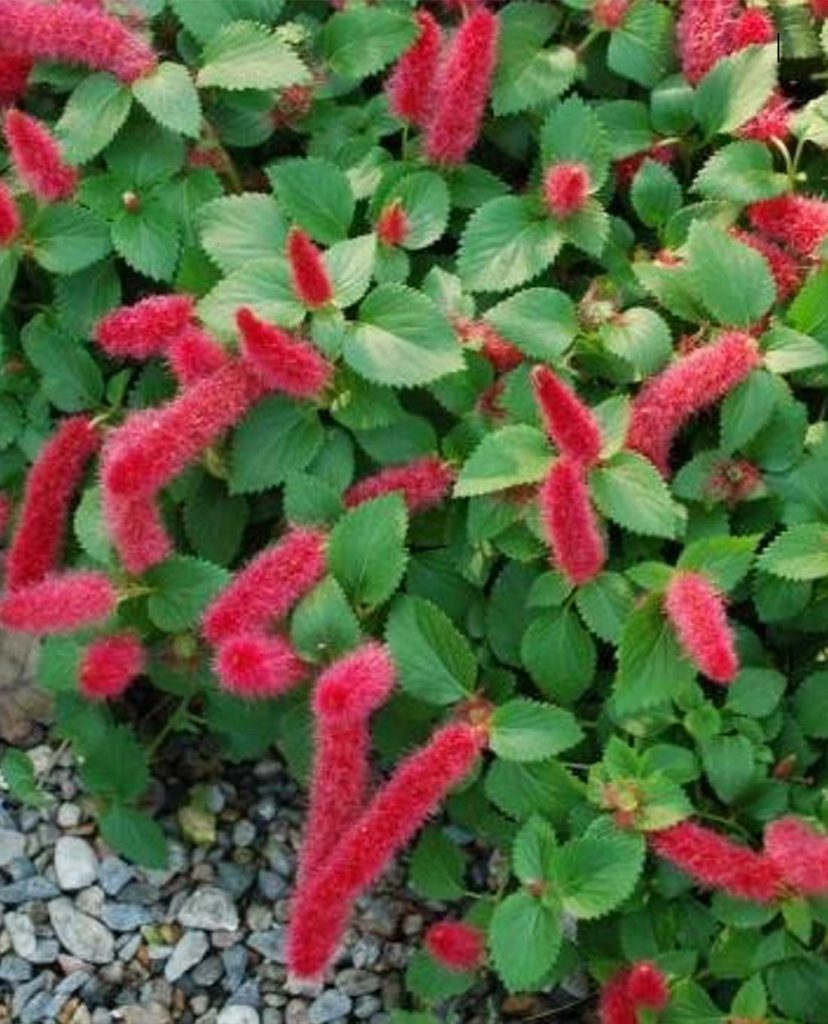
Is a vibrant tropical plant prized for its cascading, fuzzy red blooms that resemble caterpillars, chenille threads, or fox tails. Popular as a dramatic “spiller” in hanging baskets, window boxes, and patio containers, it provides continuous color and unique texture throughout the warm season. The trailing stems and dangling flower tassels create a striking display when allowed to spill over the edges of elevated planters, raised beds, or retaining walls. All parts of the plant are considered mildly toxic and may cause stomach upset if ingested by pets or people. With its naturally spreading, mounded-to-trailing growth habit, Firetail Chenille excels in mixed container plantings, where its vivid red blooms contrast beautifully with green foliage and flowering companions. Thriving in warm, humid conditions, this tropical favorite delivers months of eye-catching color and is especially valued for adding movement and softness to container gardens, patios, and outdoor living spaces.
Key Features:
Appearance:
The most defining feature is the long, drooping, or trailing fuzzy spikes that can grow up to 18 inches long on some varieties. They are made up of millions of tiny, tightly-packed feathery pistils that give them a distinctively soft, chenille-yarn or fuzzy “foxtail” texture.
The Foliage:
The leaves are relatively simple, ovate, and textured with toothed edges. They maintain a lush, deep-to-medium green year-round in warm climates.
Growth Habit:
Perfect for use as a trailing “spiller” in hanging baskets, window boxes, and patio containers. Grows 3 to 5 inches tall and trails up to 15 to 18 inches wide.
Care:
Thrives in full sun to partial shade, with at least 4–6 hours of direct sunlight daily. Brighter light encourages more abundant flowering and deeper red bloom color. Keep the soil consistently moist but well-drained, watering regularly and never allowing the soil to completely dry out. In most conditions, watering 1–2 times per week is sufficient, though more frequent watering may be needed during periods of extreme heat. Plant in a rich, well-draining potting mix and feed monthly with a balanced fertilizer throughout the active growing season, from spring through summer, to support continuous flowering. Regular pruning is recommended to maintain a full, attractive shape and encourage fresh growth, as the plant produces its showy blooms on new stems.