Tree of the month:
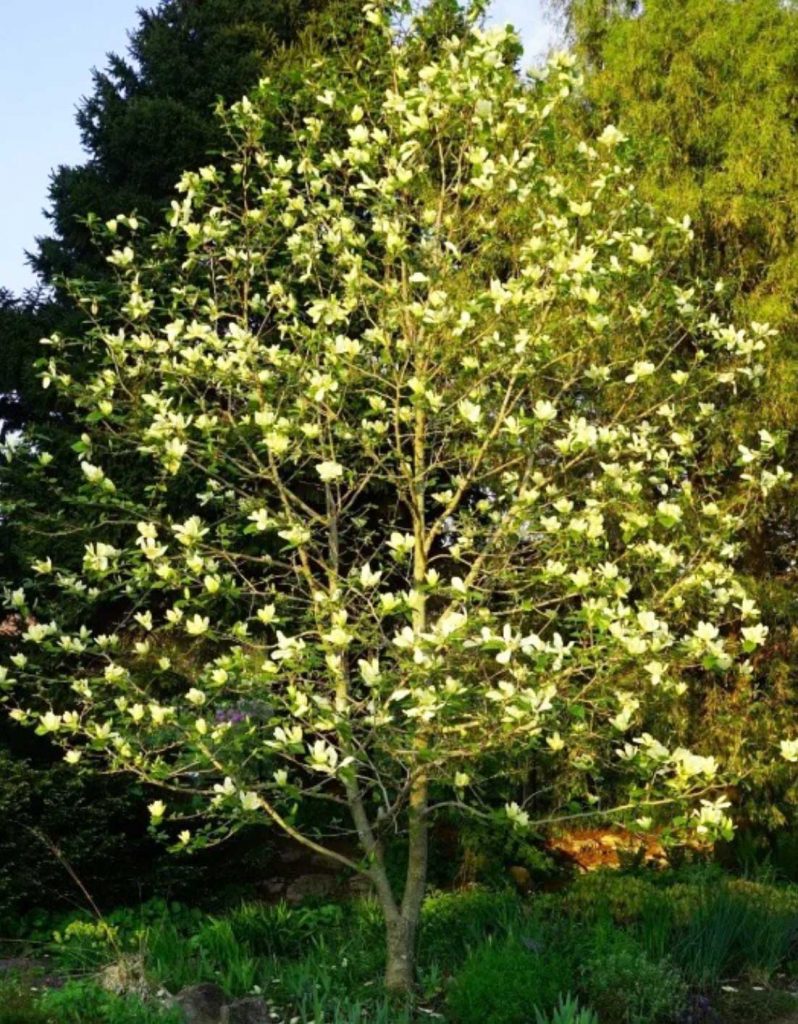
Sweetbay Magnolia (Magnolia Virginiana) is prized for its fragrant, creamy-white flowers with a refreshing lemon scent, glossy green leaves with silvery undersides, and its graceful growth habit as a large shrub or small tree—often semi-evergreen in warmer climates. It thrives in moist to wet soils and produces attractive, cone-like red fruit pods in late summer and fall that burst open to reveal bright red seeds. These seeds provide an important food source for songbirds, squirrels, and other small mammals. This magnolia also serves as a host plant for Tiger Swallowtail butterflies and attracts a variety of birds and pollinators with its showy, late-season blooms. One of the few magnolias that tolerates wet, swampy soils, it performs especially well in acidic, moisture-rich environments. Ideal for rain gardens, low-lying areas, privacy screens, or as a striking specimen tree, Sweetbay Magnolia is both resilient and ornamental, thriving where many other trees would struggle.
Key Features of the Sweetbay Magnolia:
Foliage:
The leaves are glossy dark green on top with a distinct silvery-white underside. When the wind blows, the leaves “flash” or shimmer, creating a striking visual effect.
Flowers:
It produces creamy-white, cup-shaped flowers (2–3 inches wide) with 9–12 waxy petals. They are famous for a sweet, lemony fragrance that is most potent in the evening.
Growth Habit:
Can grow as a multi-stemmed shrub or a single-trunk tree, typically reaching 10 to 35 feet in height, though it can reach up to 60 feet in warm southern climates.
Lifespan:
It is a long-lived species, often surviving between 50 and 130 years under ideal conditions.
Care:
Sweetbay Magnolia flourishes in full sun to partial shade and prefers acidic, moist to wet soils. It is highly tolerant of clay, swampy conditions, and even periodic flooding. Provide regular watering during the first few years to establish a strong root system. Prune immediately after flowering to shape the tree without removing the following season’s buds.
Shrub of the Month:
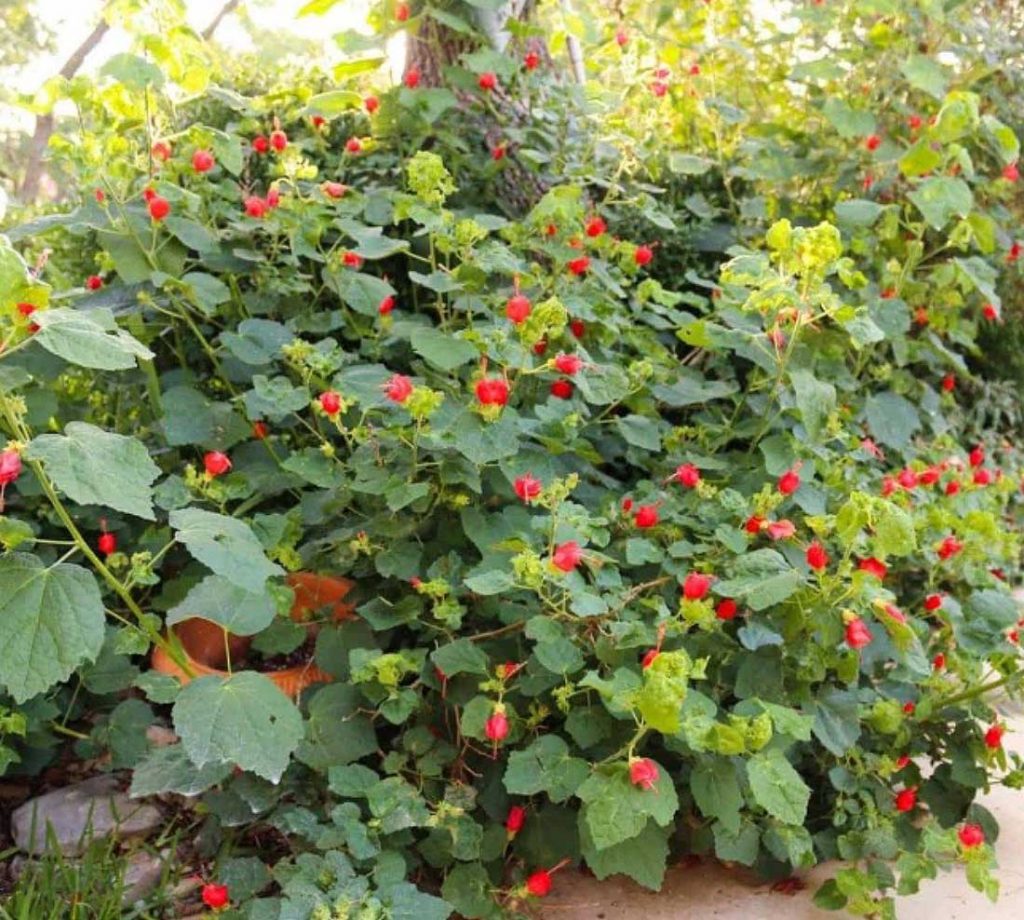
Turk’s Cap (Malvaviscus Arboreus var. Drummondii) is a resilient, flowering perennial shrub native to Texas and the southeastern United States. It is prized for its ability to thrive in shade and attract hummingbirds. Its bright red, hibiscus-like flowers never fully open—resembling a Turkish fez—and eventually produce edible, marble-sized red fruit commonly known as “Mexican apples.” Often considered an “invincible” native, Turk’s Cap is highly heat-tolerant and adaptable. While it is one of the few flowering shrubs that flourishes in shady understories, it also tolerates full sun, though its leaves may curl slightly in extreme heat. Turk’s Cap serves as a critical nectar source during the peak heat of summer and into late fall, when many other blooms have faded. It is a primary food source for Ruby-throated and Black-chinned hummingbirds, as well as Sulphur butterflies.
Key Features of the Turk’s Cap:
Appearance:
It features vibrant orange petals with dark spots that curve sharply backward (recurved), exposing prominent stamens.
Flowers:
Its signature bright red flowers remain partially closed, resembling a Turkish turban. Cultivars also exist in pink and white.
Size:
Typically 3–6 feet tall and wide; can reach 9 feet in mild winters.
Care:
In late winter, prune dead stems back to 4–6 inches to encourage vigorous spring growth. Once established, it is drought-tolerant and can survive dry spells, though it blooms best with moderate moisture. It thrives in shade to partial sun.
Perennial of the Month:
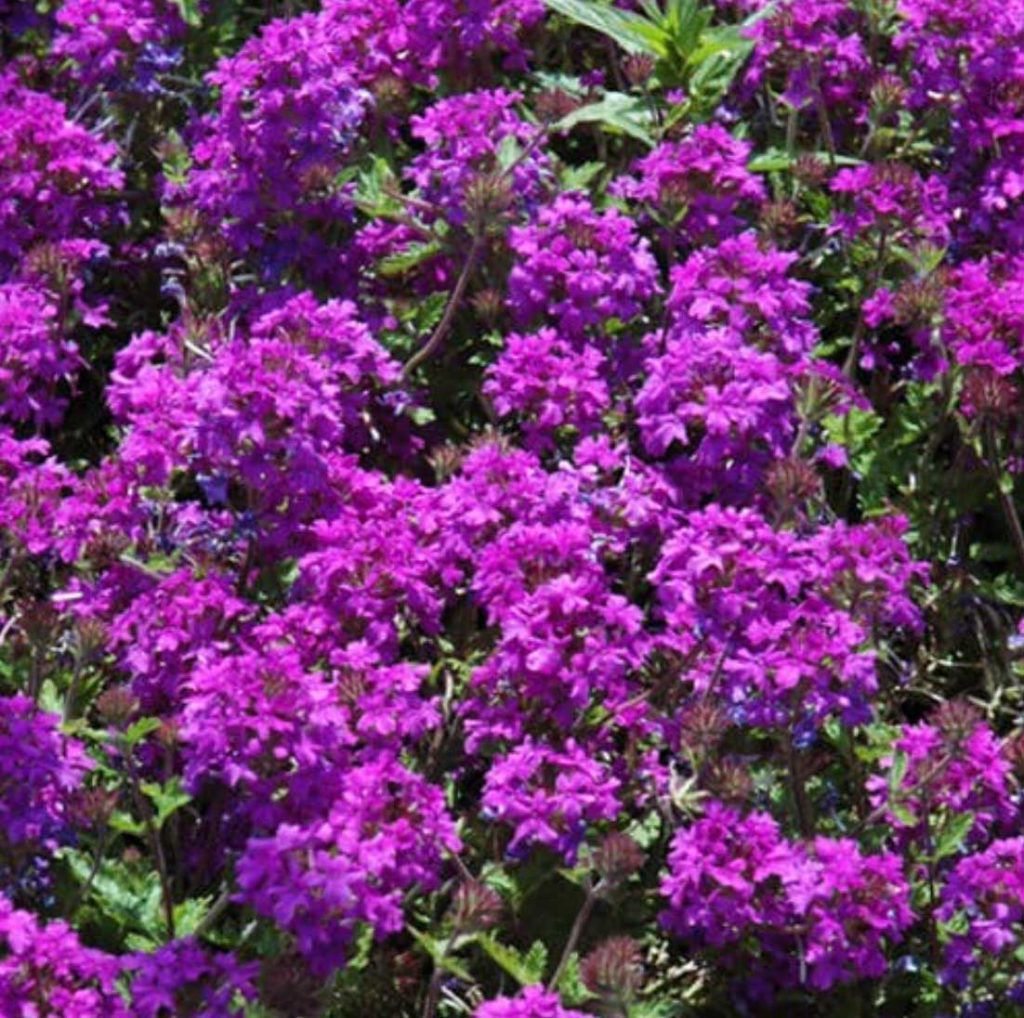
Homestead Purple Verbena (Verbena canadensis ‘Homestead Purple’) is a vigorous, trailing perennial prized for its intense, deep-purple flower clusters and exceptionally long bloom season from late spring until the first frost. This fast-spreading variety forms a dense mat of color, making it an excellent low-maintenance ground cover for sunny landscapes. Highly heat-tolerant and adaptable, it thrives in hot climates and continues blooming even through summer’s peak. Once established, it is notably drought-tolerant and requires minimal care. The nectar-rich blooms attract butterflies and bees, while its lightly textured foliage is generally deer-resistant. Ideal for mass plantings, borders, and rock gardens, it also performs beautifully as a “spiller” in hanging baskets and mixed patio containers, where its trailing stems drape over edges gracefully
Key Features of the Homestead Purple Verbena:
Appearance:
Features rich, velvety purple star-shaped flowers and dark green, glossy foliage that is resistant to mildew.
Flowers/Foliage:
Produces 3-inch long, velvety purple blooms with dark green, scalloped leaves.
Growth Habit:
A fast-growing, low-profile plant reaching about 8–12 inches in height while spreading 2–3 feet wide
Care:
Requires full sun (at least 6–8 hours daily) for optimal blooming. Prefers well-drained soil and tolerates various types, including clay, sand, and rocky soil, but will not survive in standing water. Needs regular watering until established; afterward, it becomes moderately drought-tolerant. Deadheading spent blooms and occasional shearing encourage continuous flowering and help maintain a neat appearance.