Tree of the month:
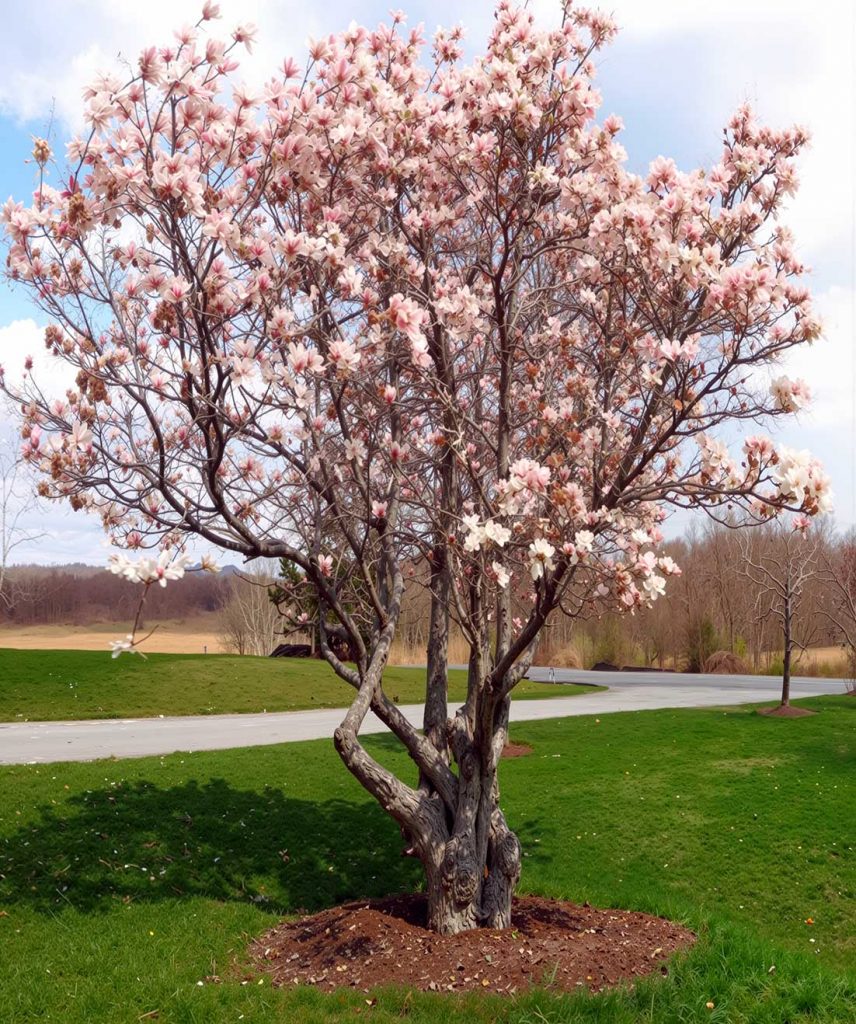
Tulip Magnolia (Magnolia × soulangeana)
Also known as Saucer Magnolia, is a beloved multi-stemmed deciduous ornamental tree prized for its spectacular, goblet-shaped flowers in shades of pink, purple, and white that blanket the branches in early spring before the leaves emerge. Unlike the evergreen Southern Magnolia, the Tulip Magnolia loses its leaves each fall and follows a traditional deciduous growth cycle. Most varieties mature at 15 to 30 feet tall and wide with a moderate growth rate of 13 to 24 inches per year, making them an excellent focal point for small to medium-sized landscapes. Their smooth gray bark and elegant branching structure provide year-round interest, even when not in bloom. Because Tulip Magnolias have thin bark and shallow, fleshy root systems, they benefit from a generous layer of mulch to protect their roots and should be planted where the soil will not be disturbed. Once established, they are difficult to transplant, so selecting a permanent location away from sidewalks, driveways, and large trees with competing root systems is essential. When given the proper growing conditions, Tulip Magnolias reward homeowners with one of the most breathtaking floral displays of the spring season.
Key Features:
Foliage:
Large, elongated, leathery leaves that are medium to dark green on top and pale, fuzzy green underneath.
Blooms:
Flowers open in early spring before the dark green leaves emerge, often coating the bare branches in vibrant color.
Flowers:
Large, goblet-to-saucer-shaped blooms measuring 4 to 8 inches across. Colors range from light pink and white to deep purple and burgundy.
Size:
Grows to 20 to 30 feet tall with a spread of up to 25 feet.
Care:
Tulip Magnolias do not perform well in heavy, poorly drained clay or areas with standing water. Keep the soil consistently moist, especially during the first few growing seasons while the tree becomes established. Once mature, they can tolerate short periods of drought but perform best with a deep watering about once a week during extended dry weather. Apply a 2- to 3-inch layer of mulch around the base of the tree to help retain soil moisture, regulate soil temperature, and protect the shallow root system, keeping the mulch a few inches away from the trunk.
Shrub of the Month:
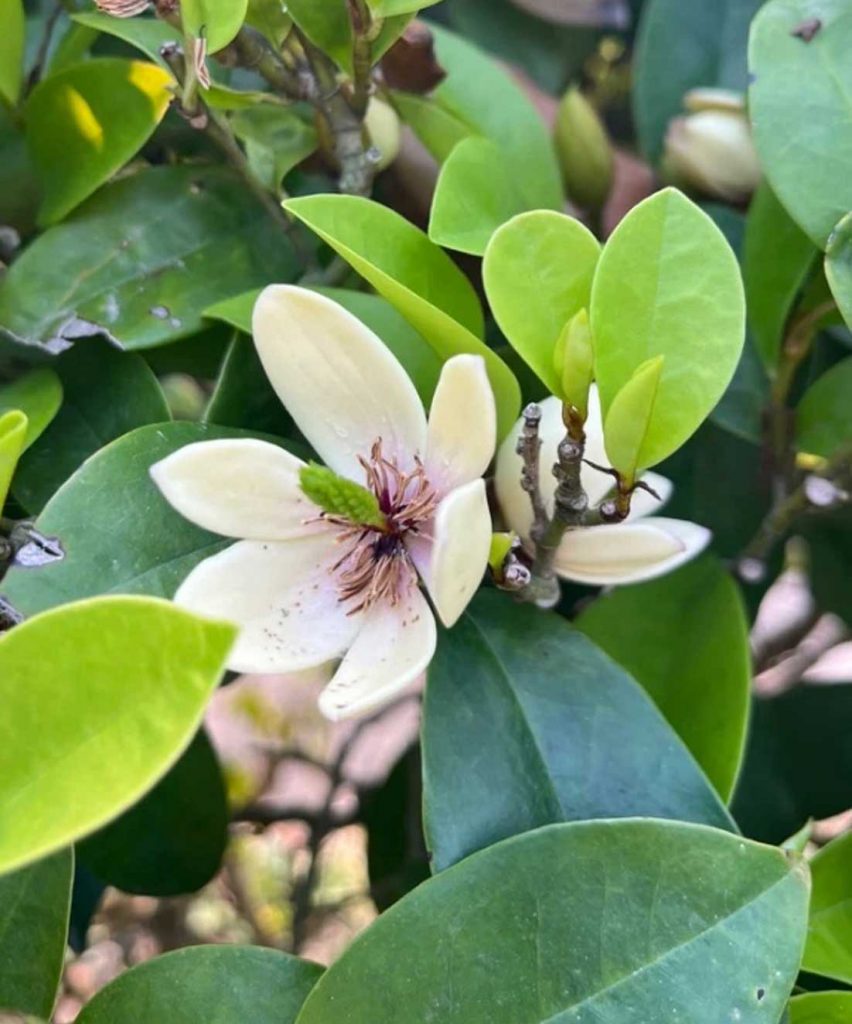
The Banana Shrub (Magnolia figo, formerly Michelia figo)
Is a cherished evergreen shrub native to China, prized for its glossy, dark green foliage and wonderfully fragrant spring blooms that smell just like ripe bananas. The sweet banana-taffy fragrance comes from a naturally occurring compound called isoamyl alcohol and is most noticeable on warm, sunny, humid days. Despite its name, this ornamental shrub is a member of the magnolia family and does not produce edible bananas. It is also highly valued for being deer-resistant and generally free of serious pests and diseases. Blooming most heavily from mid-to-late spring (April through June), the Banana Shrub produces creamy yellow flowers with burgundy edges, followed by sporadic blooms throughout the summer. Its dense, compact evergreen habit makes it an excellent choice for hedges, privacy screens, foundation plantings, or as a fragrant specimen near patios and entryways. Beyond its landscape appeal, the flowers have traditionally been used to scent teas and hair oils, while extracts from the plant have demonstrated anti-inflammatory and antibacterial properties in scientific studies, adding to its long-standing cultural and medicinal significance.
Key Features:
Foliage:
The glossy, deep green, leathery leaves provide dense, year-round coverage and drop very little litter. Immature leaves and flower buds are distinctly covered in a soft, rusty brown fuzz.
Flowers:
The blooms are small (1 to 2 inches in diameter) and creamy pale yellow or pale white with edges shaded in maroon, purple, or red.
Growth Rate:
Slow to moderate, taking 5–7 years to reach 3 meters (approx. 10 feet).
Size:
8 to 15 feet in height, though some may reach 20 feet.
Care:
Prefers partial shade to full sun. In warmer climates, morning sun with afternoon shade is ideal for maintaining rich, deep green foliage, while prolonged exposure to intense afternoon sun may cause the leaves to fade to a yellowish-green. Water regularly during the first growing season to establish a healthy root system. Once established, this shrub is moderately drought-tolerant but performs best with occasional deep watering during extended dry periods. Plant in well-drained soil, as it does not tolerate soggy or waterlogged conditions.
Perennial of the Month:
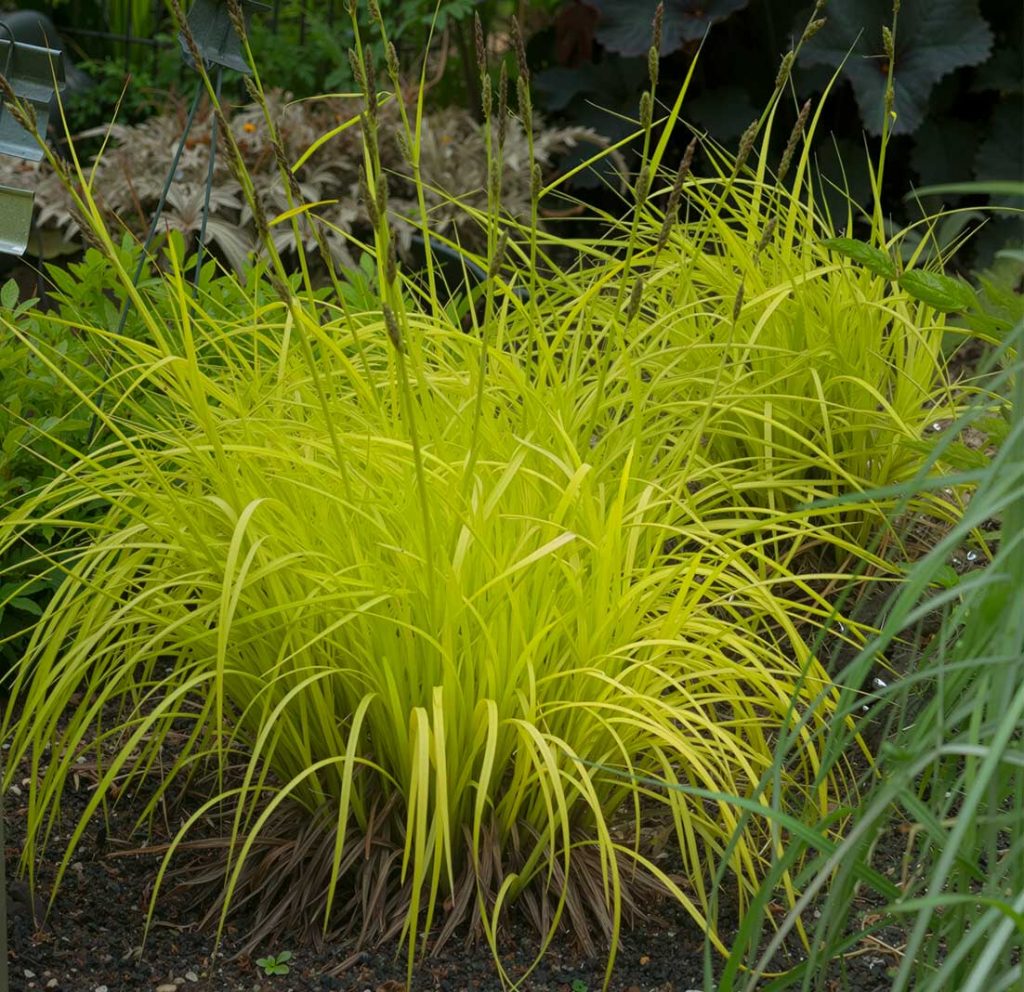
Golden Carex (Carex elata ‘Bowles Golden’, also known as Bowles’ Golden Sedge)
Is a striking, clump-forming ornamental sedge prized for its vibrant golden-yellow foliage edged with slender green margins. Its bright color provides year-round interest and creates a dramatic contrast in shaded landscapes. This versatile perennial is especially effective in woodland gardens, rain gardens, pond edges, and consistently moist borders, where it adds both texture and a brilliant splash of color. It also makes an excellent “filler” in shaded patio containers and mixed planters. In addition to its ornamental appeal, Golden Carex is highly deer- and rabbit-resistant and is valued for its dense root system, which helps stabilize soil and reduce erosion along slopes and wet areas.
Key Features:
Appearance:
Fine, arching blades that display bright gold or chartreuse coloration.
Foliage:
Bright yellow-gold with fine green edges; color is most vibrant in spring and fall.
Size:
Typically grows 1.5 to 3 feet tall and wide, forming a clean, neat mound.
Care:
Thrives in partial shade to full shade. While it tolerates gentle morning sun, prolonged exposure to intense afternoon sunlight can scorch its vibrant golden foliage. Prefers consistently moist to wet soil and performs best in rich, organic, clay, or average garden soils. It also tolerates shallow standing water up to 2–3 inches deep, making it an excellent choice for rain gardens and other damp locations. Avoid allowing the soil to dry out, as prolonged drought can cause the foliage to decline. Remove damaged or dead foliage by cutting the plant back by about one-third—or all the way to the ground—in late winter or early spring to encourage fresh, healthy growth.