
Notes from a Texas Master Naturalist about native plants and why they matter to wildlife.
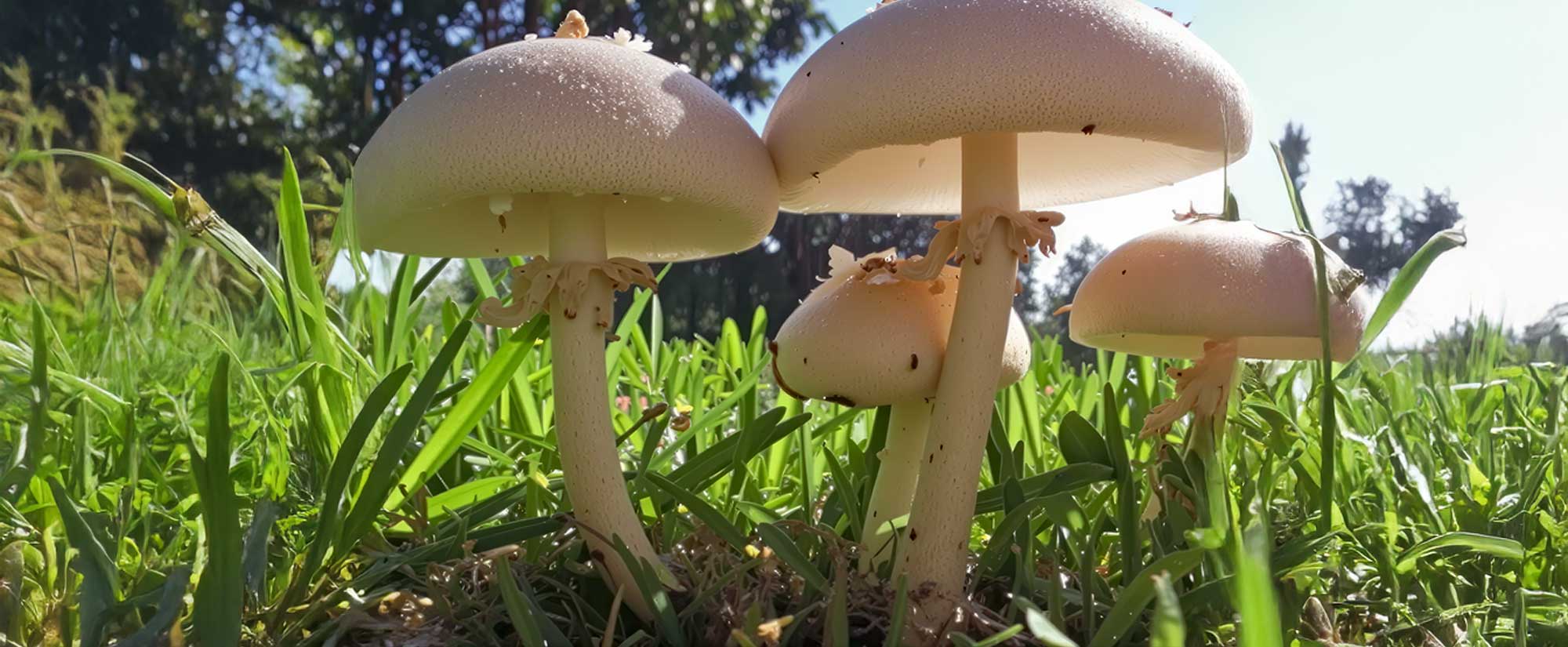
Spring warmth transitions quickly into summer heat. During this seasonal changeover, we often find mushrooms popping up. One of the most common sightings in urban landscapes are those that are often called “fairy rings.” An actual “circle” of tan colored, spotted-topped mushrooms that appear overnight after a rain, then darken and begin to look wilted after just a couple of days.
The nature of fungal growth is typically circular, with the root-like underground structures called hyphae extending out from a central point. On walks through forests, or even urban parks with some “natural” areas, it’s pretty common to find several mushrooms in a curved row or line. They may well be just a portion of a much larger circle.
The ones that most often appear as circles in landscaped yards are in the family Lepiota, (specifically Chlorophyllum molybdites) and are toxic if eaten by people or pets. If you or nearby neighbors have young children or pets that put things in their mouths, it’s a good idea to remove the mushrooms. It’s easily done: just put your hand into a plastic grocery bag and use it like a glove to firmly grasp each mushroom at the base where it connects to the ground and pull it up. Remove all that are present in this way, and just tie up the bags and put them in the trash.
Fungi use “mushrooms” to reproduce. They are similar to fruit on a tree in that respect. The presence of fungi in the soil is important, though, as they help trees and plants acquire nutrients they need. Fungi are, in fact, critical to the health of our forests that provide the clean air and oxygen we need to survive on this planet. So don’t fear mushrooms, but do try to keep those that may be unhealthy to consume away from kids and pets.
If you find mushrooms or other unusual things growing in the yard or garden, you can always ask your Native Texas Landscape consultant to help figure out what it is and whether removal is warranted. They are your best resource for keeping nature in your landscape and making the most suitable choices for your soil and your safety.
Teri MacArthur has been a certified Texas Master Naturalist since 2001 and is an environmental educator offering a broad scope of adult and youth nature programs in the region.
May 2026

