Tree of the month:
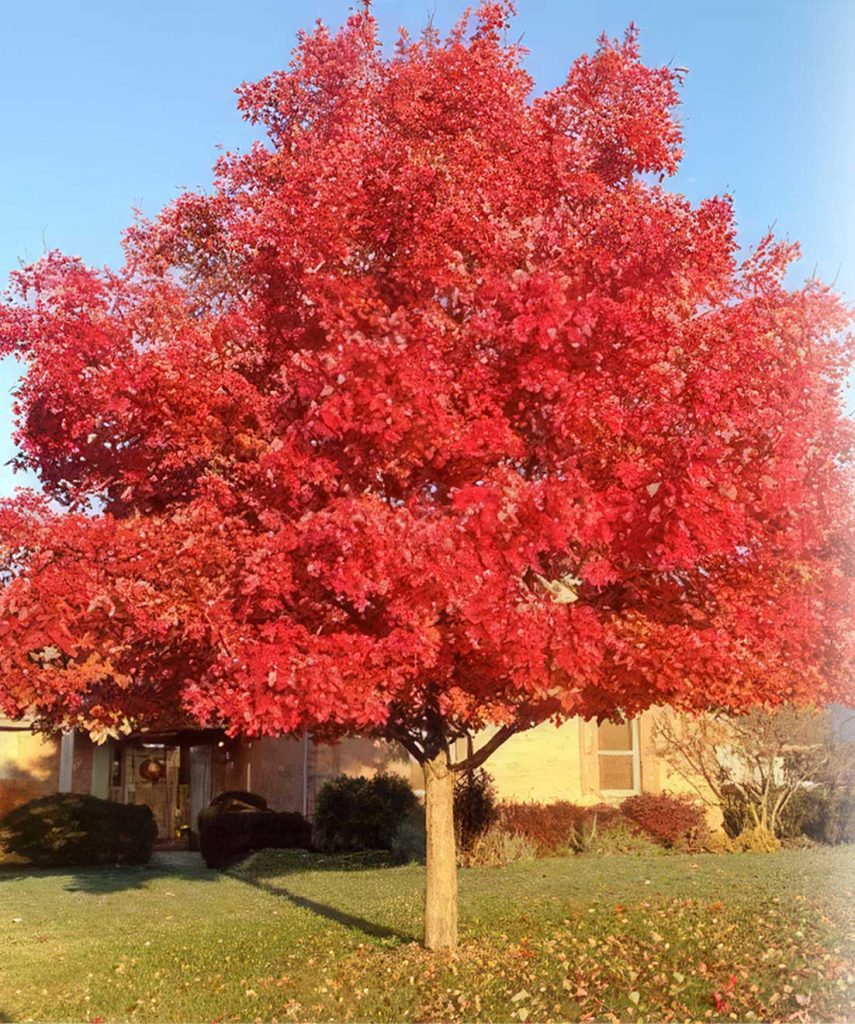
The Red Maple (Acer rubrum) is one of the most common and versatile deciduous trees in North America, prized for its rapid growth and vibrant seasonal color. True to its name, it displays red features throughout the year: red buds in winter, red flowers in spring, red leaf stalks in summer, and brilliant red foliage in autumn. Young trees have smooth, light gray bark. Compared to sugar maples, its wood is softer, making the branches more susceptible to breakage during heavy winds or ice storms. As the tree matures, the bark darkens and develops shaggy, scaly plates. When planting in a suburban yard, place the tree at least 30 feet away from structures, as its surface roots can spread extensively. The Red Maple also provides critical early-season nectar for bees and produces seeds (samaras) that feed birds and squirrels.
Key Features of the Red Maple:
Foliage:
Distinctive 3 to 5 palmate lobes with serrated (toothed) edges. They are green on top and silvery-white underneath, turning deep scarlet or orange in the fall.
Flowers & Fruit:
Small red flower clusters appear in early spring before the leaves. These develop into paired winged seeds (samaras) often called “helicopters,” which are also red or reddish-brown.
Size:
Grows rapidly (1–2 feet per year) to a mature spread of 30–50 feet.
Lifespan:
Relatively short-lived for a tree, usually averaging 80–100 years.
Care:
Thrives in full sun to partial shade, with at least 4–6 hours of direct sunlight for optimal color. Highly adaptable to various soil types—including clay, loam, and sand—but prefers moist, acidic soil. Requires regular watering during the first few years to establish a strong root system. Once established, it becomes moderately drought-tolerant, though it performs best with consistent moisture. Avoid high-nitrogen fertilizers. If needed, apply a balanced, slow-release fertilizer in early spring.
Shrub of the Month:
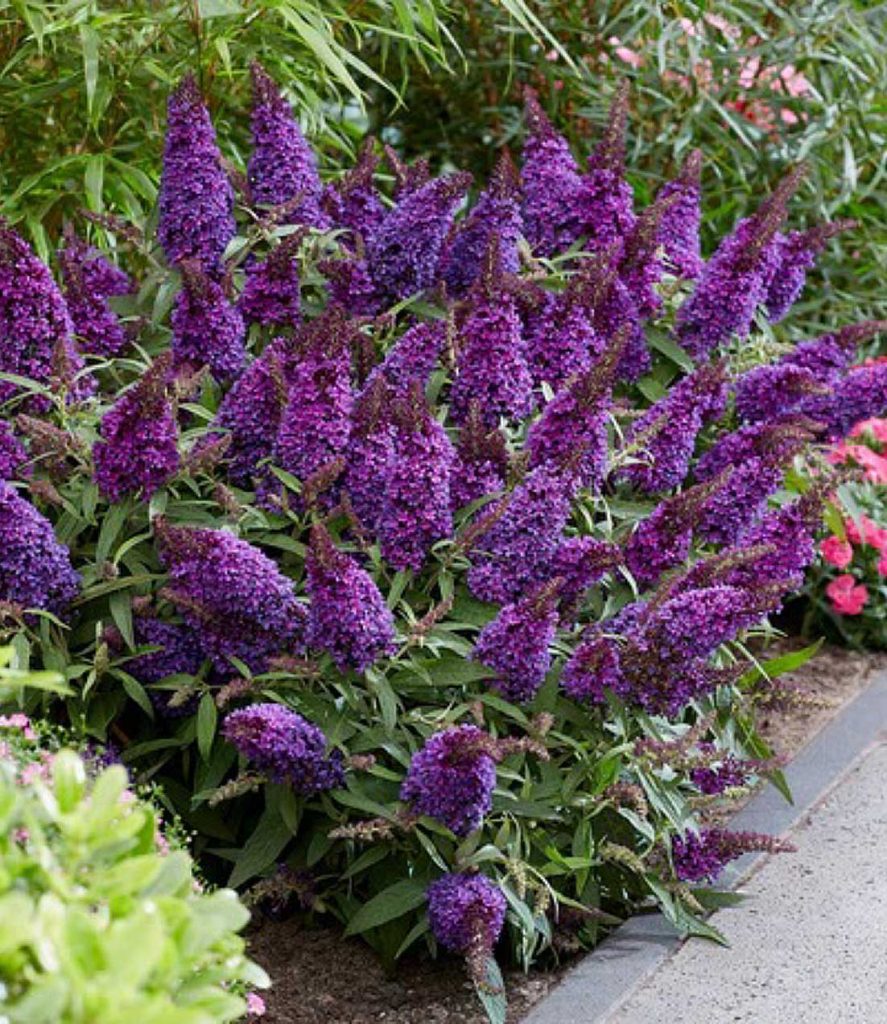
The Buddleia (butterfly bush or summer lilac) is a fast-growing perennial shrub valued for its honey-scented flower spikes that attract pollinators such as butterflies and hummingbirds. While most varieties are deciduous and grow 6–12 feet tall, modern breeding has introduced compact, dwarf cultivars ideal for small gardens. Once established, these plants are highly drought-tolerant and generally resistant to deer and rabbits. For best results, plant in spring rather than fall to allow the shrub sufficient time to establish a strong root system before winter. In some regions, traditional Buddleia Davidii can be invasive, so selecting sterile, non-invasive hybrids is recommended.
Key Features of the Buddleia:
Blooms:
Long, cone-shaped panicles that come in shades of purple, lavender, white, pink, orange, and red.
Bloom Time:
Flowering typically begins in midsummer and continues through the first frost.
Growth Habit:
Very fast-growing, often reaching full size in one season. Height and spread vary by cultivar, from dwarf varieties (1–3 ft) to large shrubs (10–12 ft).
Care:
Full sun (at least 6 hours daily) is essential for optimal growth and flowering. Excellent drainage is critical. In clay soil, plant slightly above ground level to form a small mound that directs water away from the roots. Buddleia thrives in well-drained, average-to-fertile soil but struggles in heavy, waterlogged clay. Water regularly during the first growing season to establish a strong root system. Once established, the plant is drought-tolerant and requires deep watering only during periods of extreme heat. Prune in spring, after new growth appears, rather than in fall, to reduce the risk of winter damage. Because most varieties bloom on new wood, cutting them back to about 12 inches promotes more compact growth and abundant, eye-level flowers.
Perennial of the Month:
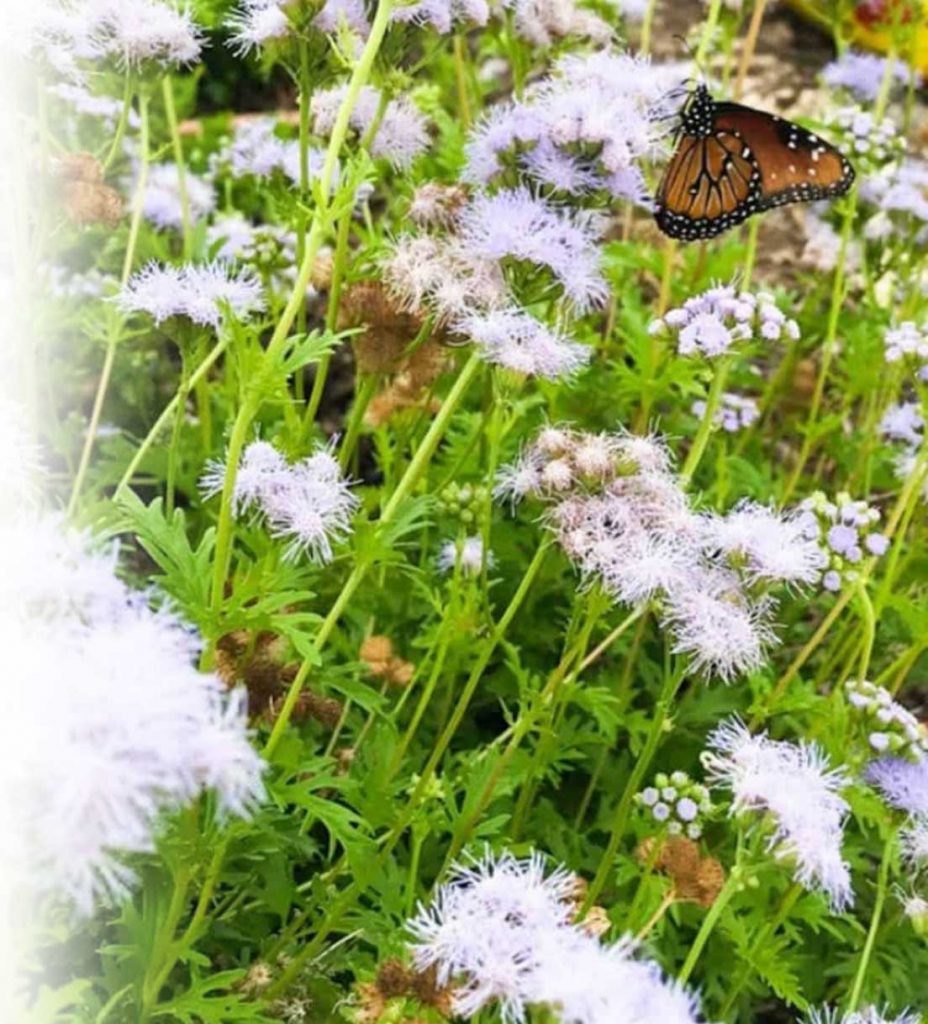
Gregg’s Mistflower (Conoclinium Greggii) is a rugged, sun-loving perennial native to Texas and the Southwest, widely celebrated as a “butterfly magnet.” It is especially valued for attracting large numbers of Queen and Monarch butterflies, which flock to its fuzzy, lavender-blue blooms from late summer through the first frost. Male Queen butterflies consume a chemical compound in the nectar to produce a sex pheromone that attracts females. During mating, the male transfers this compound to the female as a “nuptial gift,” which she then uses to make her eggs toxic and unpalatable to predators. In addition to Queens and Monarchs, Gregg’s Mistflower also attracts honeybees, native bees, and migrating Monarchs.
Key Features of the Gregg’s Mistflower:
Appearance:
Features clusters of fuzzy, powder-blue to lavender flowers that bloom from late spring through fall. It has distinctly divided, fern-like light green foliage.
Bloom Period:
Long-lasting blooms from late spring through fall, peaking in late summer.
Size:
Typically grows 1 to 2 feet tall and spreads 2 to 3 feet wide. Under ideal conditions, it can spread up to 6 feet via underground rhizomes.
Care:
Prefers full sun to partial shade. It blooms most profusely in full sun but benefits from afternoon protection in intense heat. Drought-tolerant once established, it performs best with occasional deep watering. Unlike its cousin, Blue Mistflower, it does not require consistently moist soil. Highly adaptable to a range of soil types—including sand, loam, and clay—provided the soil is well-drained. Avoid soggy conditions in winter to prevent root rot. Cut back to the ground in late winter or early spring, after the last frost, to encourage vigorous new growth. Pinching periodically in spring promotes a denser, more compact canopy.