Tree of the month:
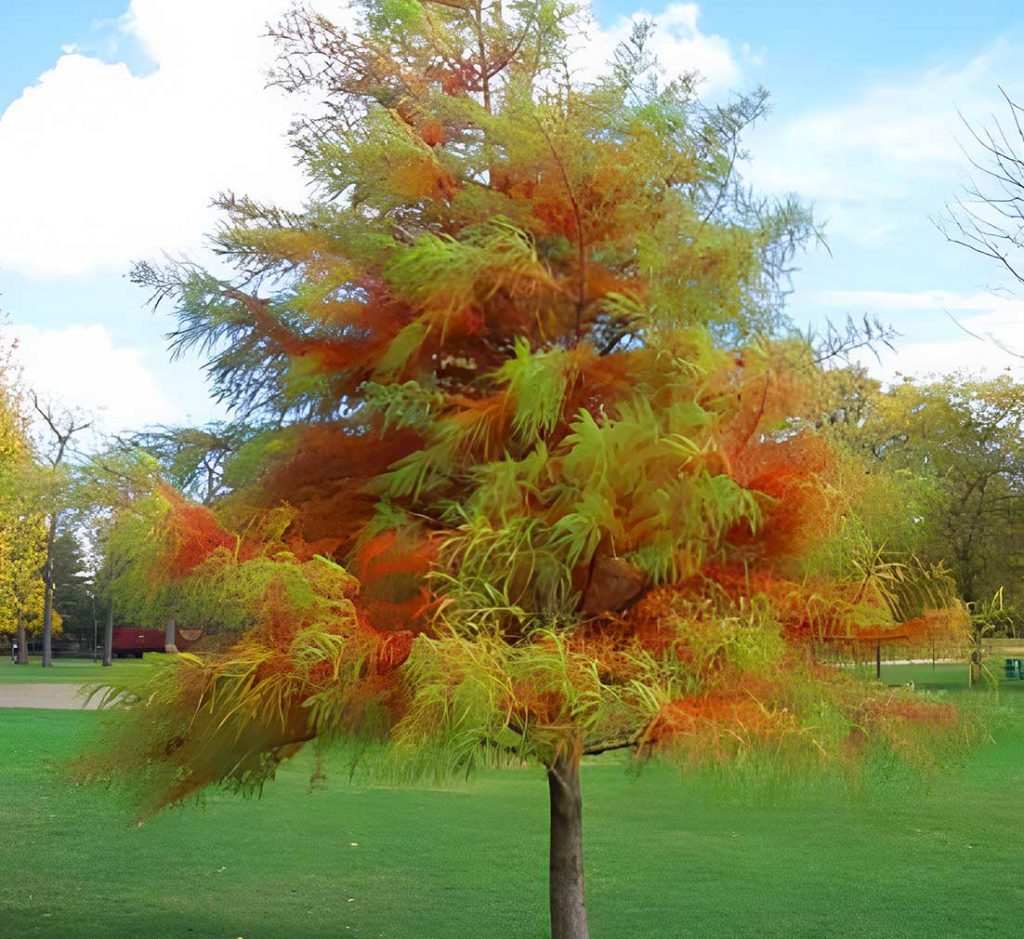
The Bald Cypress (Taxodium distichum) is a large, deciduous conifer native to Texas, most commonly associated with swamps, floodplains, and river corridors. Its fine, needle-like foliage turns copper to rusty red in autumn before shedding. In saturated soils, the species develops pneumatophores (“knees”) that aid in oxygen exchange, though these are often absent in better-drained Central Texas sites. Bald Cypress supports wildlife by providing seeds for birds and mammals and nesting habitat for large raptors such as bald eagles and ospreys. Due to its mature size and root structure, adequate spacing from structures is recommended.
Key Features of the Bald Cypress:
Appearance:
Young trees have a narrow, pyramidal shape, while older trees develop a broad, flat-topped canopy. They can reach heights of 50 to 100+ feet.
Size:
Fast-growing (2-3 ft/yr) and can reach over 100 feet tall, becoming massive.
Lifespan:
These trees are among the longest-lived in the state; some, like those along the Frio River, are estimated to be over 600 to 1,000 years old.
Care:
Bald cypress trees require full sun for optimal growth and prefer acidic soils. In highly alkaline conditions, they may develop chlorosis, resulting in yellowing foliage. Although naturally adapted to wet environments, bald cypress is surprisingly drought-tolerant once established and can grow successfully in a wide range of soils, including dry upland sites.
Shrub of the Month:
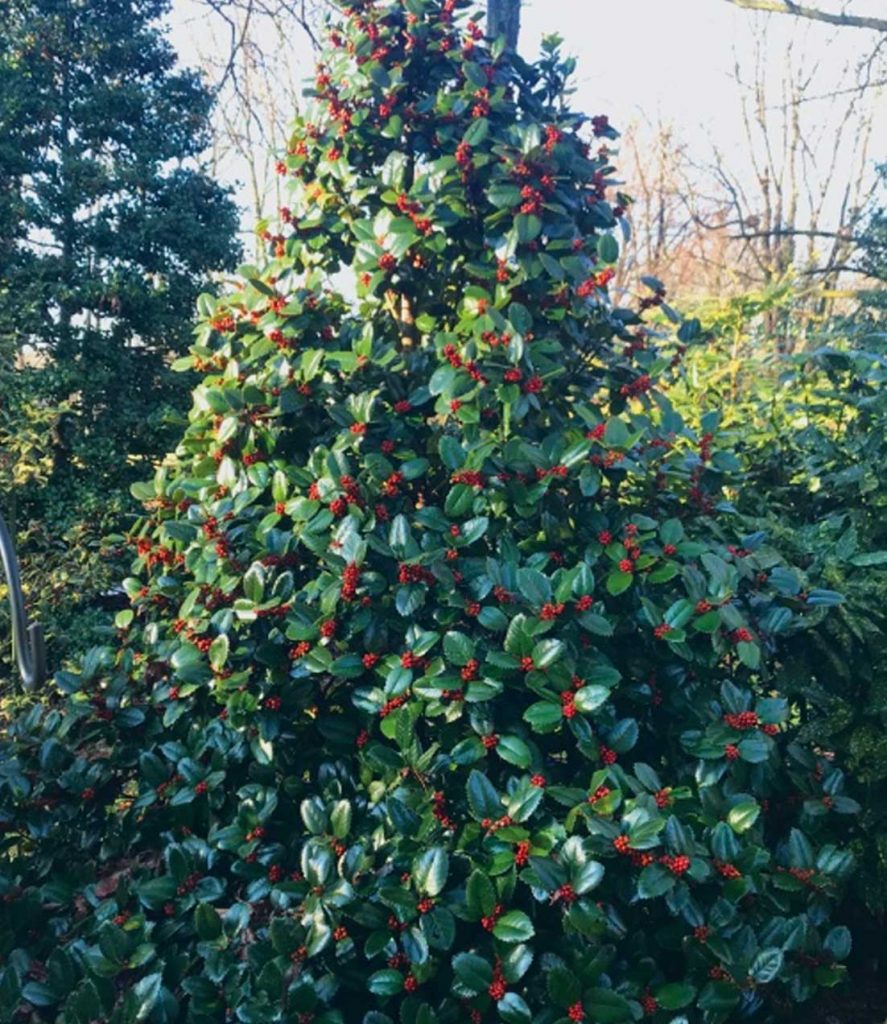
The Liberty Holly (Ilex × ‘Conty’) is a robust, broadleaf evergreen shrub valued for its deep green, sharply serrated “saw-tooth” foliage and dense, pyramidal form. A member of the popular Red Holly series, this hybrid—developed by crossing Ilex ‘Mary Nell’ with Ilex ‘Red Delight’—was bred for durability, rapid growth, and heavy fruiting. Widely used in landscape design, Liberty Holly serves as an effective privacy screen or stately corner accent, as it maintains a clean, refined shape with minimal pruning compared to larger cultivars such as ‘Nellie R. Stevens.’ It is also commonly used to soften the corners of two-story homes or planted in large containers to frame formal entryways. In late fall, the shrub produces clusters of vivid red berries that persist throughout winter.
Key Features of the Liberty Holly:
Appearance:
It grows naturally in a tight, upright pyramidal form. This makes it an excellent choice for formal designs as it requires less shearing to maintain a “Christmas tree” shape than wider varieties.
Foliage:
The shrub features highly attractive, spiny, oval, dark green evergreen leaves with a glossy appearance that remains all winter.
Size:
The ‘Liberty’ holly grows at a moderate rate into a dense, upright pyramidal form, reaching a mature height of 10 to 15 feet and a width of 6 to 8 feet (though some sources mention 8 feet tall with a 6-foot spread).
Care:
Best in full sun to partial shade. Prefers moist, acidic, well-drained soil and does not tolerate standing water or highly alkaline conditions, which can cause leaf yellowing. Water regularly during the first year to establish roots. Once established, it has average drought tolerance but benefits from supplemental watering during periods of extreme heat. Minimal maintenance is required. If shaping is desired, prune in late winter or early spring before new growth begins. It responds well to shearing, making it suitable for formal hedges.
Perennial of the Month:
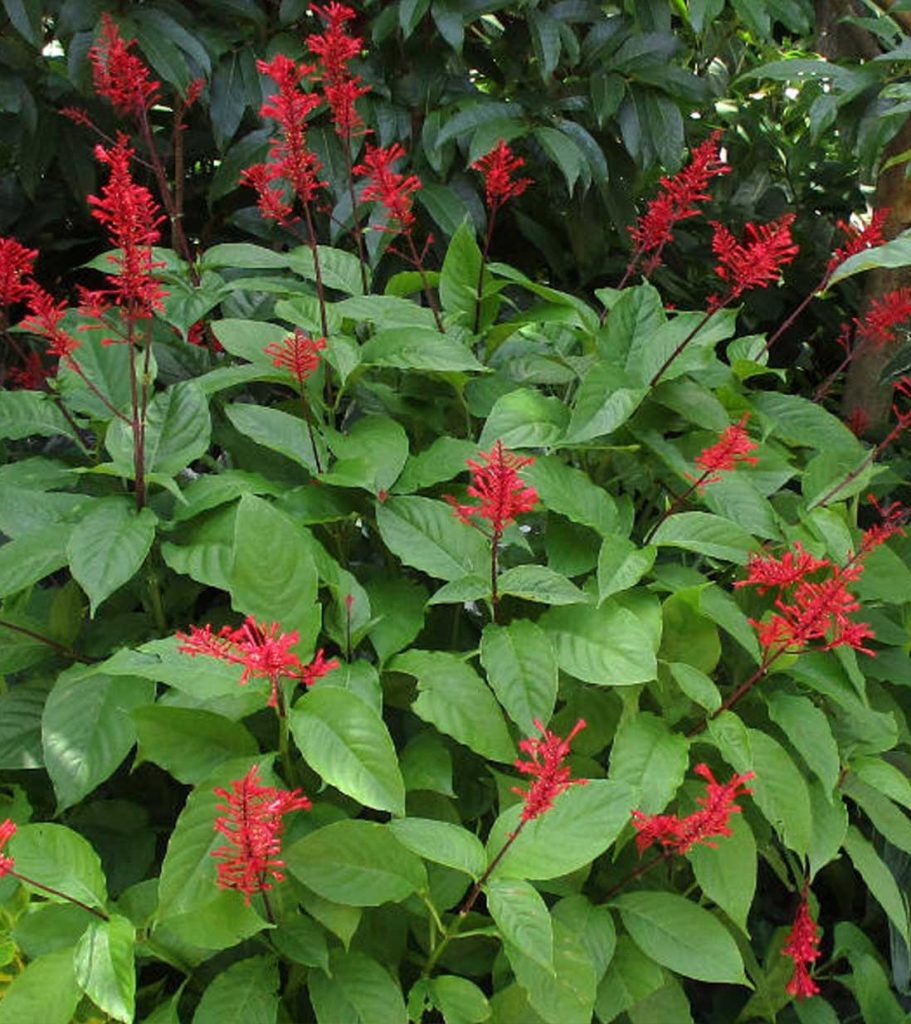
The Firespike (Odontonema tubaeforme, formerly O. strictum) is a lush tropical shrub, celebrated for its spikes of waxy crimson flowers that bloom from late summer through winter. A top-tier pollinator magnet, it is especially favored by hummingbirds and butterflies for its abundant nectar. Evergreen in frost-free climates, it behaves as a perennial in cooler zones (8–9), dying back to the ground in winter and returning vigorously in spring. Its height and upright form make it an excellent anchor or background plant in garden beds, as well as ideal for hedging, screening, or serving as a focal point in pollinator gardens. Widely considered a “must-have” for hummingbird gardens, Firespike’s tubular flowers are perfectly shaped for their beaks, and its late bloom provides crucial nectar during fall migration.
Key Features of the Firespike:
Flowers:
Showy, 9- to 12-inch long spikes of 1-inch, waxy, tubular flowers bloom mainly in the fall and winter or year-round in frost-free zones.
Foliage:
It features large, glossy, dark green leaves with a somewhat coarse, upright growth habit.
Size:
The plant typically grows to a height of 4 to 6 feet, and can spread 2 to 3 feet wide, though some varieties can reach up to 10 feet in frost-free areas.
Lifespan:
Perennial that can live for many years, often returning faithfully every spring.
Care:
Thrives in full sun to partial shade, with a preference for some shade in hot climates. Adaptable to most soils, it grows best in rich, moist, well-drained conditions. Water regularly, especially during dry spells, though it’s moderately drought-tolerant once established. Prune in late winter or early spring to shape and refresh the plant—hard pruning encourages fuller, bushier growth.