Tree of the month:
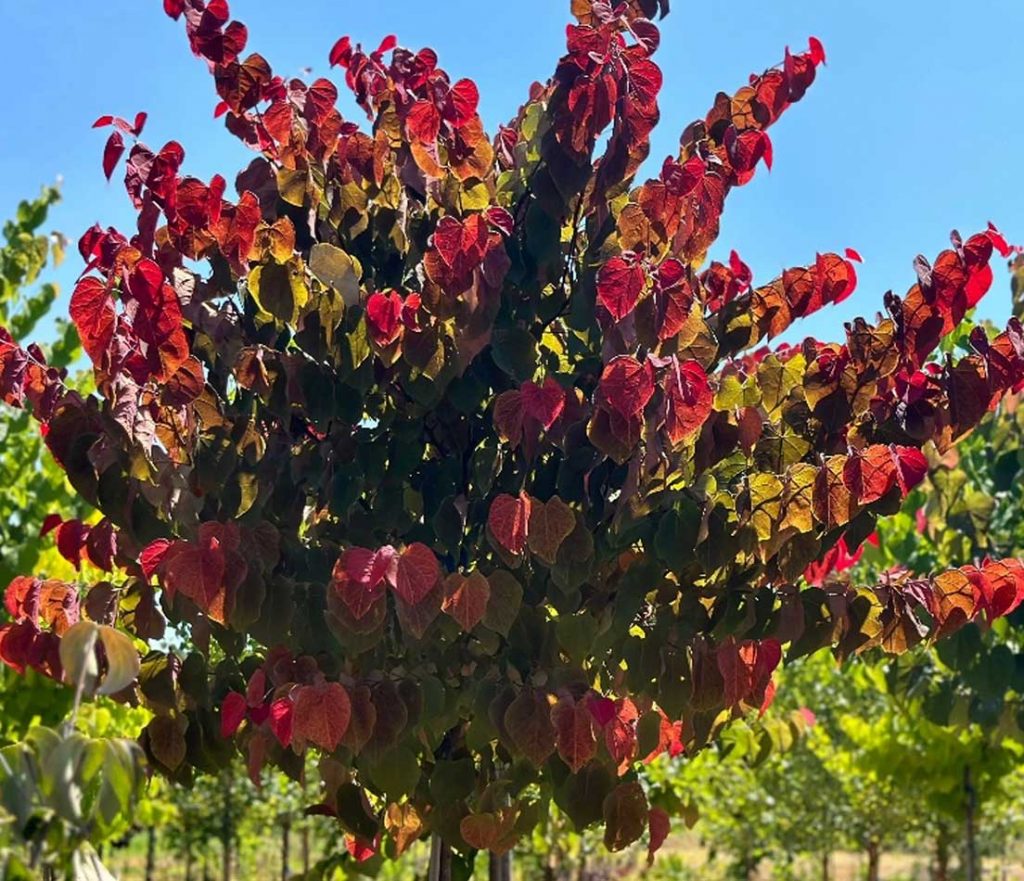
The Flame Thrower Redbud (Cercis canadensis ‘NC2016-2’) is a modern ornamental tree renowned for its mesmerizing foliage, which displays up to five distinct colors simultaneously on a single branch. Before the foliage emerges in early spring, the bare branches are adorned with clusters of vibrant pink or reddish-purple flowers resembling peas. Unlike some other redbuds, the Flame Thrower is considered sterile and does not produce messy seed pods. Plant it in well-drained soil in full sun to partial shade and ensure thorough watering during its establishment phase. Prune it in summer after blooming. The early spring flowers serve as a vital nectar source for bees and butterflies.
Key Features of the Flame Thrower Redbud:
Foliage:
Heart-shaped leaves emerge as deep burgundy-red, transitioning through shades of bright red, orange, and yellow before maturing to green. Because leaves mature at different rates, branches often show all these colors at once.
Size:
Typically reaches a height of 15–20 feet and a width of 10–15 feet, making it ideal for small yards or as a landscape specimen.
Care:
During the first year, water the plant once or twice a week, checking the top three inches of soil for dryness. Once established, it becomes moderately drought-tolerant. Apply 3 to 4 inches of wood mulch around the base—keeping it away from the trunk—to conserve moisture and suppress weeds. Ideally, prune in early summer after flowering to remove dead or crossing branches and to thin the canopy for improved air circulation.
Shrub of the Month:
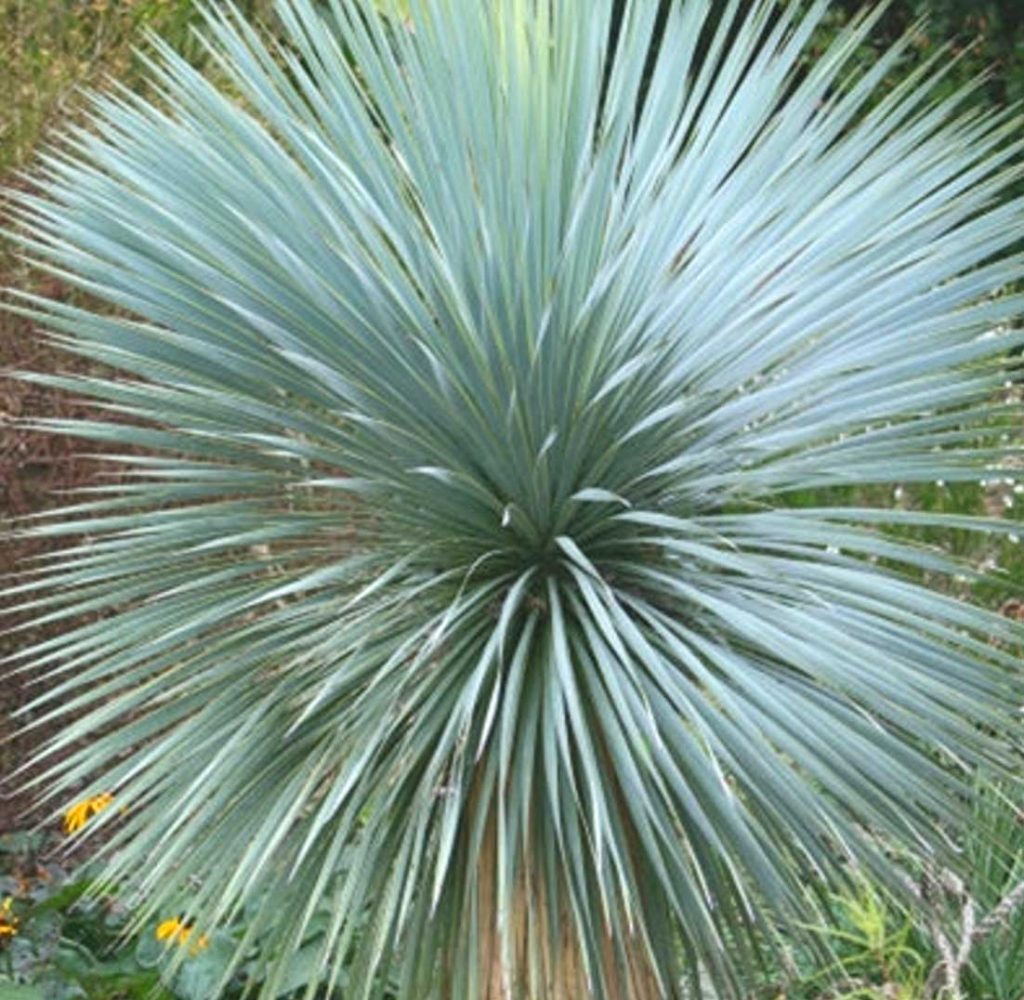
Yucca rostrata is a striking, architectural plant native to Texas and northern Mexico. Technically a tree-like perennial succulent, it is often grown as a large shrub or small tree in landscaping because of its trunk-forming growth habit. Highly valued for its blue-gray foliage and low-maintenance, drought-tolerant nature, it is an excellent choice for xeriscaping. It is also deer-resistant, heat-tolerant, attracts pollinators such as butterflies and hummingbirds, and even produces edible flowers.
Key Features of the Yucca Rostrata:
Appearance:
It features a symmetrical, sphere-shaped crown of long, narrow, blue-green to blue-gray leaves. As it matures, a trunk develops, which can be left with a “skirt” of old leaves or trimmed for a cleaner look.
Flowers:
Large, creamy-white flower stalks appear in spring/summer.
Size:
Typically grows slowly, reaching a mature height of 8 to 15 feet and a width of 2 to 4 feet.
Care:
Requires full sun or mostly sun (at least 3-6 hours of direct sun). Thrives in average to lean, very well-drained soil, including sandy or rocky terrains. It has zero tolerance for wet, heavy clay soils, so amending the soil is crucial for success. Extremely drought-tolerant once established, requiring very little water.
Perennial of the Month:
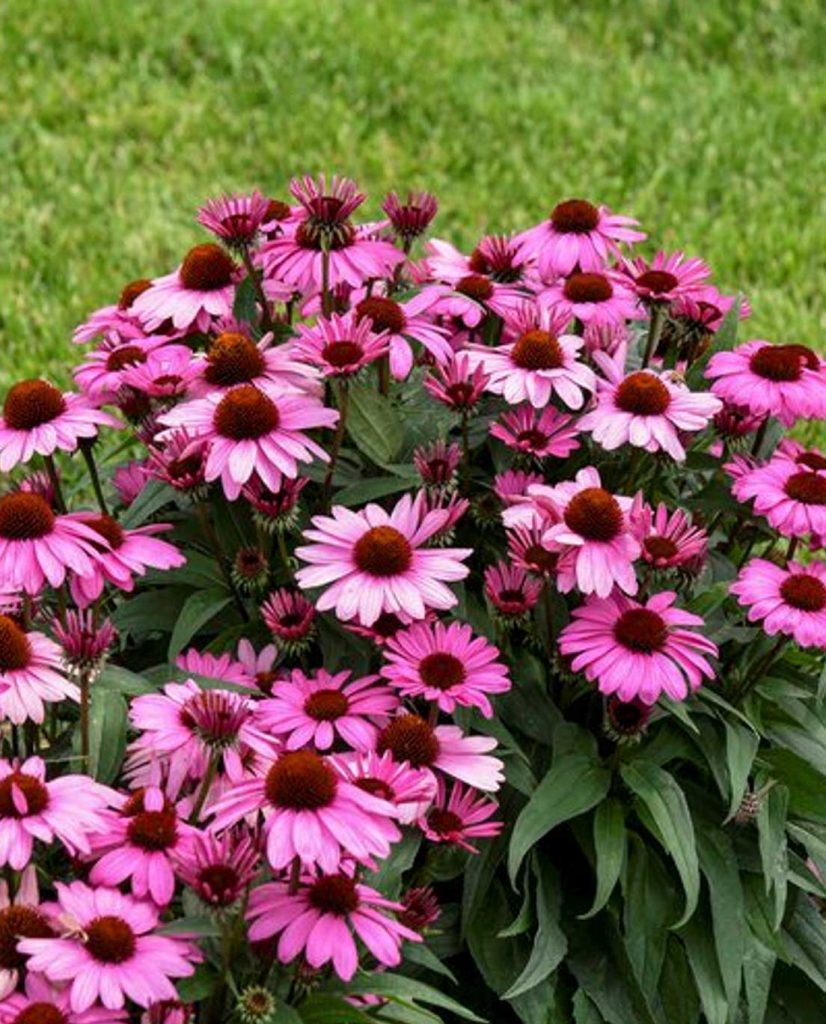
The Purple Coneflower (Echinacea purpurea) is a hardy North American perennial known for its striking, daisy-like blooms, featuring pink to purple petals and a prominent, spiny central cone. Reaching heights of up to five feet, it is prized in gardens for its long flowering season—typically from early summer through autumn—and its ability to attract a wide range of pollinators, including butterflies, bees, and hummingbirds. Easy to grow for both novice and experienced gardeners, this nectar-rich plant serves as a “pollinator buffet” for Monarchs, Swallowtails, and various bee species. It is generally deer-resistant due to its coarse texture, although hungry deer may occasionally nibble on the young foliage. Historically, Native Americans used the roots and stems to treat ailments such as snakebites and sore throats. Today, Echinacea extracts remain popular in herbal medicine for supporting immune health and helping prevent common colds.
Key Features of the Purple Coneflower:
Appearance:
Large flowers (3–5 inches in diameter) featuring drooping magenta, rose-pink, or lavender rays surrounding a raised, coppery-orange to brown central cone.
Bloom:
Typically blooms from June through September, providing a long summer show, with many varieties starting in late spring and continuing into early fall, attracting pollinators like bees and butterflies. Deadheading can encourage reblooming.
Growth Habit:
An upright herbaceous plant that typically matures to 2–5 feet in height and 1–3 feet in spread. It has coarse, dark green, lance-shaped leaves that are rough to the touch.
Care:
Performs best in full sun (at least 6–8 hours daily) but can tolerate partial shade. It adapts well to various soil types—including sandy, loamy, and clay—provided they are well-drained. The plant prefers a neutral to slightly acidic pH (6.5–7.0). Once established, it becomes notably drought-tolerant thanks to its deep, fibrous root system; however, young plants need weekly watering during their first year. Removing spent blooms encourages continuous flowering into the fall, while leaving some seed heads provides an essential winter food source for songbirds such as goldfinches.